
Ottilie Patterson & Chris Barber Band – Mama He Treats Your Daughter Mean
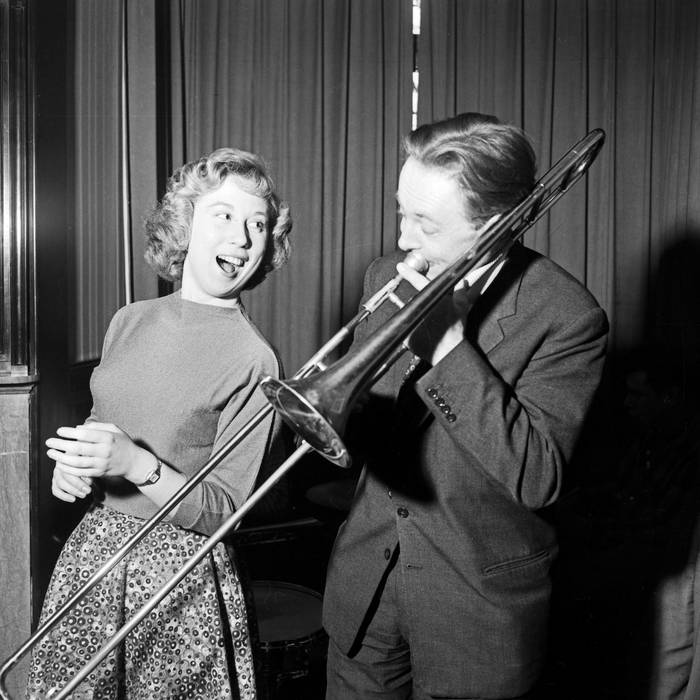
For this edition of Old Fruit I am looking back at half a dozen vintage jazz selections all of which are cooking, boiling, frothing, fizzing and fantastic. The late fifties and early sixties were overflowing with undeniable jazz music, it is probably fair to assess that this was the last era when jazz sailed close to the mainstream. Not only was it a period of great leaps forward in melodic and structural evolution but it was delivered with such ice-cool style and image. No wonder it all just looks so classic now. So, set alongside some of this bebop, bohemian cutting edge elegance, some of the British trad jazz contingent may have started to look very old fashioned seemingly overnight. But while there may be some truth to that with a combo like the Chris Barber Band, as this clip clearly proves they could still tear it up with the best of them. Mind you, they were instantly pushed into a different league altogether any time the deceptively domestic looking Ottilie Patterson stepped up to the microphone, a singer of such pure vocal power and honesty that she even managed to out-soul Ruth Brown when covering her 1953 R&B classic as the band do here. One look at Ottilie and you know this is the real thing!
Jimmy Giuffre Trio – The Train And The River
As mentioned in the text accompanying the first song, the style and visual presentation of jazz during this period was potentially as crucial to its long term status as the music itself. Nowhere was the indelible late fifties jazz look captured on film better than the 1958 picture ‘Jazz On A Summers Day’, the opening sequence of which are the images that appear with this performance. The Jimmy Giuffre Trio had released this piece the previous year and it won many plaudits for its realisation of Giuffre’s “blues based folk jazz” which merged understated swing with the sensibilities of a chamber referencing musicianship. That this rendition at the 1958 Newport Jazz Festival should open the film depicting events and performances at that years festival only serves to cement this hypnotic piece into the fabric of the eras jazz lineage. And just look at the names in those opening credits, if you have not seen this movie get on whatever streaming platform you need to find it and put that right immediately.
Art Blakey & Lee Morgan – I Remember Clifford
Whilst not quite as celebrated as Miles Davis, Lee Morgan has stood the test of time and to this day remains one of the essential players to listen to from this period of jazz history. He had a beautiful tone to his playing, an awareness of melodic motion and an appreciation of the simple truth that sometimes less is more. His music remains a real pleasure to experience and his untimely death in 1972 is still one of the greatest losses to the music world imaginable. Lee had recorded this tune, a 1956 Benny Golson composition written in tribute to trumpeter Clifford Brown who had died in a car crash, on his 1957 Blue Note Records album ‘Lee Morgan Volume 3’. On both the recording and this live footage the composer Golson is present on saxophone and it is said that he regarded it as a symbolic passing of the torch from Brown to Morgan, at the time still very much a young trumpet prodigy from Philadelphia.
Charles Mingus – Better Git It In Your Soul
This was the opening track from Mingus’s legendary 1959 album ‘Mingus Ah Um’. It suits the mans personality, it is a mammoth tune that unfolds with might and momentum and packs a punch with undeniable force. You see it in these images (when they begin, the first three minutes of this one is audio only), even when the brass soloists step forward it is still Charles you cannot take your eyes off, a powerhouse propelling everything forward. The tune was inspired by the gospel singing and preaching heard where Mingus grew up, the shouts, handclaps and sense of anything goes improvisation reaching for, and finding, the spirit of a Southern Black church service. This tune is considered one of the best examples of Mingus’s faculty for bringing complex themes and structures into a soulful and rousing melange of sound.
Bill Evans – Waltz For Debby
This tune first appeared on Bill Evans 1957 debut album ‘New Jazz Conceptions’ on Riverside Records. It was written for his niece, Debby Evans, and is a beautifully lyrical waltz that blends Evans classical sensibilities with jazz harmonies. This was to become Evans most iconic original composition that would also go on to be the title track for a live album recorded at the Village Vanguard in June 1961, this proved to be the final recording for Evans legendary first trio, often hailed as the pinnacle of piano trio interplay. This particular piece of film is from 19th March, 1965 recorded for the London BBC TV series Jazz 625.
Miles Davis – So What
And I simply cannot resist the urge to finish this jazz half dozen with arguably the most iconic piece of film footage from the genre available on YouTube. ‘So What’, with the previous songs leader Bill Evans on piano not to mention John Coltrane and Cannonball Adderley on saxes, was recorded and released in 1959 on the landmark Miles Davis album ‘Kind Of Blue’. To this day it remains an all time jazz classic, so wonderful in its simplicity on the one hand and yet a foundation block for all the freedoms and melodic space that would define modal jazz in years to come and prove to be a guiding influence for many a legendary artist, including Coltrane himself as well as people like Herbie Hancock and so much of what was to evolve on the Blue Note label in the sixties, seventies and beyond. On top of that, it just all looks so fantastically cool.
 Fruit Tree Records