Following Friday’s Old Fruit feature that used the TV re-broadcast of 1985’s Live Aid concert from England and the USA as a launchpad for those retro film clips, I have additional reflections on that famous day’s concert. As highlighted with my comments on Dire Straits, there was some inevitable wiser head re-evaluating of other big name sets that I may have previously been lukewarm about. Top of that list is Queen who, I have to confess, have always been a musical blind spot for me but, as much as I am aware that praising Queen’s Live Aid set goes way beyond stating the bleeding obvious, I cannot find fault with it or them as a band. I thought The Who also were far more punchier and energetic than I previously recalled (was their set really interrupted by an outage prompting the broadcaster to show David Bowie & Mick Jagger’s ‘Dancing In The Street’ video? I do not remember that). Little wonder it is written that the old timers won the day over the eighties pop acts appearing earlier. The likes of Spandau Ballet and Ultravox sounded so thin in that arena, not to mention ridiculous looking in mid-summer heat with their ankle length trench coats and gallons of mullet holding hairspray. And what was Paul Young thinking playing ‘Do They Know It’s Christmas?’ in July sun when he surely knew the whole ensemble were closing the concert with it? For me, the two mid-eighties pop stars coming out with most credit on the day were Howard Jones and George Michael; the former for being head and shoulders the best grand piano player on stage and the latter, joining Elton John for a version of ‘Don’t Let The Sun Go Down On Me’, simply down to his showcasing that strong and pure singing voice he possessed.
Dig back in time to the July 1985 music press and it appears that Live Aid was not given unconditional support despite the undoubted good intentions of Bob Geldof. The NME claimed that the concerts were “unwilling to address the furious conflicts of ideologies that allowed the African disaster to happen” whilst the writer Don Watson also dismissed the shows as “corporate pop turned corporative charity.” Amidst the criticisms of the occasions inability to address underlying political and social issues contributing to the famine there were equally loud voices pointing out certain non-participants and the lack of prominent black artists. From a personal point of view there were a number of bands and artists making a noise in 1985 who arguably deserved a slot; of those Billy Bragg, The Smiths, R.E.M., The Waterboys, The Fall, Talking Heads, Fine Young Cannibals and The Pogues are all good shouts (certainly stronger than Adam Ant that year). However, Bob Geldof did acknowledge the issue about black artists and was undoubtedly sincere in his frustration that scheduling and performance condition preferences prevented booking big names like Michael Jackson and Prince. As for the other nuanced critiques, Geldof had an endearing way of cutting through that objectional noise to focus people’s attentions on the far more basic and urgent prerogative of raising money to supply food for starving people and you cannot knock him for that.
On the BBC repeat broadcast there were a few of the American sets that did not get a re-run. I touched upon the Led Zeppelin absence in the Old Fruit feature last week, but the penultimate appearance on the night by Bob Dylan, backed by Ronnie Wood and Keith Richards, was also surprisingly cut. I went online and found most of his set and it turned my thoughts to earlier this year and the ‘A Complete Unknown’ film which recalled the mid-sixties outburst of hysteria from the folk scene after Dylan went electric. I spotted members of that folk community in the Live Aid footage; Peter, Paul & Mary were definitely on the stage during the ‘We Are The World’ finale whilst earlier in the day Joan Baez had sung ‘Amazing Grace’, utilizing that rather irritating folk trope of speaking every line to the crowd before singing it. The idea is to encourage audience participation but it has the unfortunate opposite effect of making Joan appear like a vibe-sapping try-hard head mistress. Still, I could not ignore that, twenty years since he was booed for abandoning topical folk material to play electric music of a more personal, surrealistically poetic nature, here was Dylan heading up a mainstream public event with a topical undercurrent playing the same acoustic folk music he had been accused of dropping two decades earlier and getting panned for it. Bob’s setlist at Live Aid was ‘Blowin’ In The Wind,’ The Ballad Of Hollis Brown’ and ‘When The Ship Comes In’ and upon revisiting it I felt strongly that the fundamental issues were out of his control. Behind that thin curtain backdrop was an impossible to ignore turbulence of set-building activity for the closing number alongside a gathering throng of unconstrained performers preparing a land grab for a prime onstage position during the rousing show closing chorus. Still Bob being Bob, he had to throw his own spanner into what could have been a mainstream career resurrecting moment by expressing a desire for some of the money to go towards American farmers struggling to pay their mortgages. Ultimately, that did inspire Willie Nelson, Neil Young and John Mellencamp to launch Farm Aid but on the day, it is fair to say the sentiments felt off colour to many who were solely, and rightly, focused on the famine crisis at hand.
Anyway, enjoy this month’s playlist which does not feature many artists who appeared at Live Aid although Neil Young and the Beach Boys do get a look in…
This weeks retro half dozen is inspired by my recent re-watching of the July 1985 Live Aid concert on the BBC, who re-broadcast over eight hours of a highlights package. It reminded me of how, after that show, for the following seven years or so the British TV would repeatedly return to the day/night long live broadcast of a multi-artist concert from Wembley Stadium format. The notable ones I am revisiting with my selections today are the Nelson Mandela concerts from both 1988 and 1990 then finishing with a stand out performance from the 1992 Freddie Mercury Tribute Concert. First up though is one of the songs from that original Live Aid event that has actually aged rather well. Dire Straits ground a lot of music fans down in the late eighties simply because, like Phil Collins, you could not get away from them. It was after Live Aid actually that they truly became massive with their ‘Brothers In Arms’ album ushering in the age of the CD. But over exposure is no longer an issue forty years later and I was rather impressed with the energy (especially that of rhythm guitarist Jack Sonni), drama and tension on show here, you have to admit all that success was actually well deserved.
Tracy Chapman – Fast Car
Performing in front of a full Wembley Stadium and an incalculably large TV audience, this was the appearance that gave Tracy Chapman a career in music. To this day it stands as one of the all time remarkable, against the odds, dramatic moments in music history. She was on the bill as an unknown, filling in for a couple of songs while the larger stage to her left prepared for Stevie Wonder. On top of her very clear nerves was the intimidation of a crowd entertaining themselves with what sound like football chants, even as she started playing. Unbelievably due to the situation, that she was just backing herself with an acoustic guitar and the fact those present probably did not know the songs, Tracy almost instantly had them silenced and hanging on her every word. The fact that this is a superb song cannot have gone against her either but does this not prove that, sometimes, a great song is all you need?
The Bee Gees – You Win Again
At the time of Live Aid in 1985 the Bee Gees were keeping a much lower profile and so did not appear. Five years earlier, following their imperious disco years, it would have been unthinkable for them not to feature on the bill but by the mid-eighties they had enough self awareness to not risk over exposing themselves. However, by 1988 they had spent the previous winter firmly re-establishing their credentials as one of the all time great British bands following the chart topping success of ‘You Win Again’. They opened with that one at Wembley and re-watching this clip I was surprised / not surprised to notice they had Phil Collins on drums.
Little Steven Van Zandt & Simple Minds – Sun City
If I had to pick one band who could be accused of triggering the general reaction against this kind of star-studded, earnest, fund and awareness raising stadium shindig it could be Simple Minds. They certainly felt the rough end of the music press around this time, charged with evolving from a previously cutting edge band into a unit whose music was deliberately tailored towards a stadium sound, with air-filled wide reaching brush strokes and easily digestible ‘big’ production singularly failing to disguise a lack of subtlety or nuance. All a little harsh it has to be said although, the idea that they were intentionally reaching for a large outdoor arena size crowd was fair. Despite this, their appearances at the Mandela shows were triumphs as this clip shows, where they stepped back and gave front stage to Steven Van Zandt (who also brought Peter Gabriel, Jackson Browne, Darryl Hannah, Youssou n’Dour and Meat Loaf on as backing singers). His song was a direct political assault and a crowd pleaser all rolled into one audience pleasing, streetwise rock ‘n’ roll bundle.
Lou Reed – Last Great American Whale / Dirty Blvd
Talking of rock ‘n’ roll streetwise cool, two years later Lou Reed appeared hot on the back of his 1989 career masterpiece ‘New York’ album. Here he played solo electric versions of two tracks from that record, both very lyrical and heard minus the rhythm section familiar from their album versions, two facts that might have prevented them translating too well to a stadium sized audience ready to punch the air. But there is precious little evidence on the TV footage viewed here of any audience restlessness and Lou himself is the epitome of composure, wrapping himself around the songs and even changing the odd lyric here and there for the benefit of a UK audience who might not have known the NRA was a “gun club”.
Robert Plant & Queen – Crazy Little Thing Called Love
Queen might well have been the group who benefited most from Live Aid while Plant’s former band Led Zeppelin were decidedly lacking in positives. Queen’s 1985 set has gone on to be historically regarded as a showbusiness lesson in how a band should approach these sets. They rehearsed for starters, then engaged the audience with singalong, clap-along interaction in a twenty minute slot that abbreviated certain tunes in order to leave the stage with maximum hit packing punch. Led Zeppelin on the other hand, reforming for the first time since the 1980 death of drummer John Bonham, were under-rehearsed and retrospectively so disappointed with their Phil Collins on drums assisted showing that they did not allow footage to be included on DVD re-issues and, presumably, did not give the BBC clearance to re-broadcast as it was not in their highlights package. This 1992 version of a Queen rock ‘n’ roller finds both factions on superb form and Zeppelin even get a look in, as the rendition begins with the opening section of their ‘Led Zeppelin II’ track ‘Thank You’ before springing into the Queen zinger, Plant doing a stupendous job on a tough occasion for all involved.
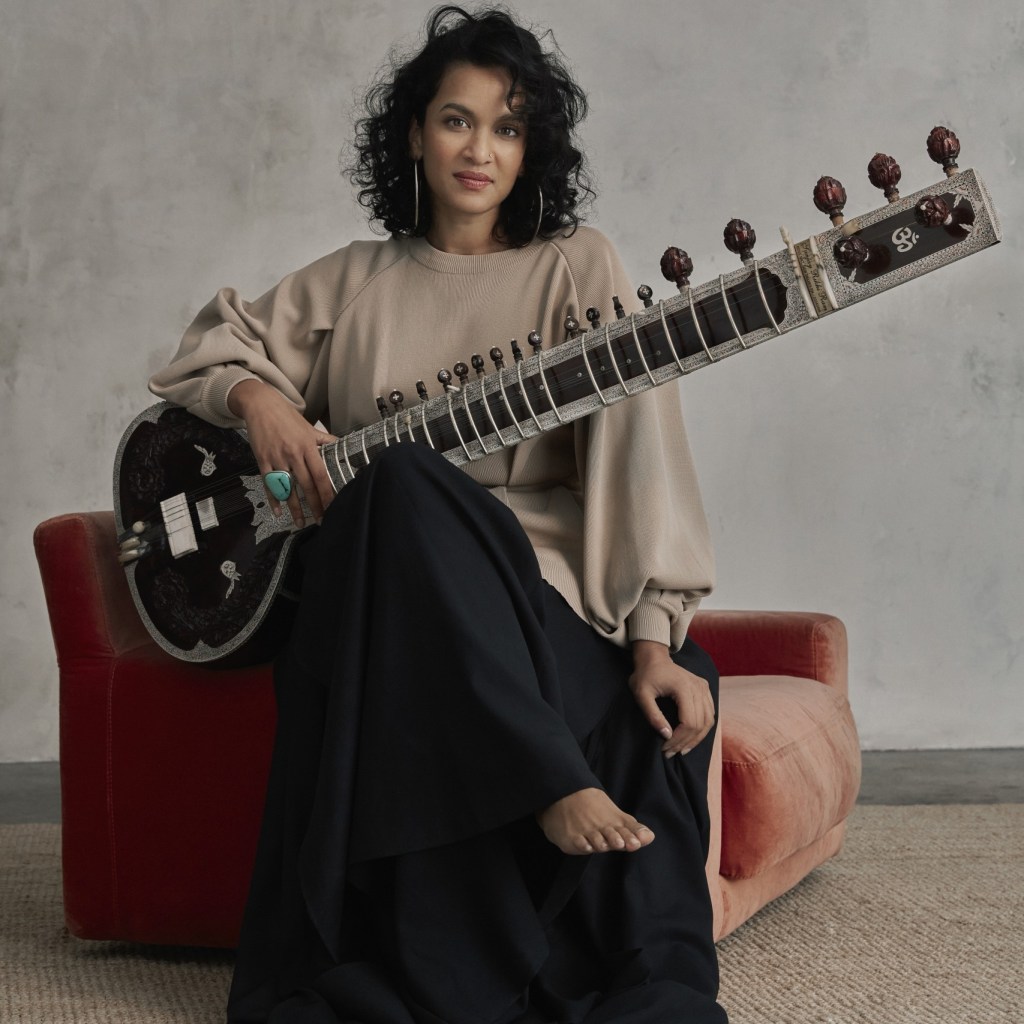
The music of this sitar master has evolved into a thing of vibrant grace, she can simultaneously evoke Indian tradition with a looping hypnotism that references electronica and flashes of western melodics. This is a performance of the closing track on the second in a trilogy of mini-albums Anoushka has released since 2023; the first was serene and introspective, the second a Grammy nominated piece with ambient sonics touching on vulnerability and transformation while this years concluding ‘We Return To Light’ leant towards her Indian classical roots alongside trance passages. Her upcoming performance at the BBC Proms will see Shankar present a world-premiere of music from all three editions of the trio in an orchestral setting, fresh with new arrangements in a single uninterrupted Albert Hall session. It promises the be a career defining moment for one of the richest talents in the music scene today.
Annie & The Caldwells – Wrong
This gospel/soul stomper is the lead track from Annie & The Caldwells 2025 album ‘Can’t Lose My (Soul)’ released on Luaka Bop Records. This may be the first trace I can find of them on vinyl but they are a multi-generational family band from West Point, Mississippi whose powerful lead vocalist Annie Brown Caldwell first sang with the Staples Jr. Singers in the 1970s. Along with her husband Willie she formed this band in the early 2000’s, partly to enable their children to sing in a spiritually grounded setting. It is one of those children, Deborah, who takes the attention grabbing lead vocal on ‘Wrong’ and it heads up an album, recorded in a local church, of instantly likeable songs focusing in on family, faith and resilience.
Mairi Morrison & Alasdair Roberts – Màiri nighean Dòmhnaill
This is a live performance of a track from Mairi and Alasdair’s album ‘Remembered in Exile: Songs and Ballads from Nova Scotia’ available from Drag City Records. The broad mission of the pairs collaboration is stated in the album title, an idea that came about after a trip to Canada in 2023 when the Nova Scotian bassist and arranger Pete Johnston invited them to explore traditional songs with Scottish roots. With many of the songs first collected in the 1940s, the Gaelic speaking Morrison and prolific folk collaborator Roberts were drawn to the themes of exile and migration and set about shining some fresh light on this material in a 21st century setting.
Throwing Muses – Summer Of Love
Without losing an ounce of their piercing intensity, 2025 has seen the welcome return of Throwing Muses who released their new album, ‘Moonlight Concessions’ earlier this year on Fire Records. Still fronted by singer and songwriter Kristin Hersh, she recalls that this song began life as a bet with a guy for a dollar that revolved around the idea that the seasons don’t change us. I like the way she resolves each chorus with a concession that she lost the bet, later explaining “he said we aren’t just planted here, stagnant, we’re in flux, responding to love like octopuses moving across the ocean floor. Turns out he was right, and I still owe him a buck.”
Niamh Bury – Geordie
The brilliant GemsOnVHS continue to build a treasure trove online archive of filmed performances with this latest edition, shot in the Dublin home of singer Niamh Bury, as she gave them another essential nugget for their inventory performing this traditional folk tune. In the lyric a lover pleads for the life of the songs main character and Niamh injects raw emotion and feeling into her rendition. She has recently caught the attention of these pages with her 2024 debut album, ‘Yellow Roses’, which was one of the best albums of the year in our opinion, not just for its folk bedrock but also the way it pulled in suggestions of wider, disparate musical influences such as alt-rock and classical. This is a timely check-in for a brief snapshot of her ongoing journey as we wait for future releases.
Paul Weller – Pinball
Paul Weller’s new album ‘Find El Dorado’ is a typically eclectic and revelatory cover versions set well worth digging into. The relatable thing about Weller is he never loses that crate digging, new discovery thrill that all us record collector types permanently live with. And the other thing I can say about him is he generally has impeccable taste. This is a song originally written and recorded by Brian Protheroe in 1974 and it certainly proves what a fertile period that late sixties, early seventies era remains for music hounds. This one was apparently only a recent discovery for a lifelong hunter like Weller and it reminds us that those rare and wonderful finds do not always have to be the high value pieces, the original Chrysalis 45 of this song can be easily picked up on Discogs for the £1/£2 mark, so never give up the search.
For this weeks dive into some selections and recommendations from the past I thought I would go back and see what Fruit Tree Records were causing a stir exactly ten years ago this month. Jo Rose had come to my attention at the time, a crazily gifted singer-songwriter from the Manchester area, with this song which instantly proves ten years later that quality is timeless. I do not know what brought him under my radar, maybe it was his association with First Aid Kit who he was not only supporting in concert but was also in a relationship with the duo’s Klara Söderberg. Whatever, his work had a musical finesse that is hard to find but as is so often the story with artists at this pubs and clubs level, they can disappear from view or just quietly drop out of music altogether. And so it is with great sadness that I have just found, after searching the internet for news on his current whereabouts, that he tragically died last year at the age of 36 following a head injury connected to an epileptic seizure. I had not intended for this post to be a tribute to someone special who has gone too soon, I was merely hoping to throw some appreciative retro light on wonderful music, but now I am doing both. Please listen to Jo Rose.
Wolf Alice – Turn To Dust
The good thing about having this sites monthly playlists stretching back a lot of years (roughly fourteen) is that I can occasionally find that I was actually slightly ahead of the curve on a band or singer. This tune from Wolf Alice’s newly released debut album ‘My Love Is Cool’ featured in the July 2015 monthly playlist and I do recall going on to feel they were a thoroughly deserving recipient of the Mercury Music Prize in 2018 following the release of their second album ‘Visions Of A Life’. This was a record that took the bare bones of the ghostly sound they are perfecting here, in a quality audience live clip from the following year, into new fields of celestial majesty with a sprinkling of indie-pop hooks for good measure. They have a fourth studio album called ‘The Clearing’ set to be released next month.
Flo Morrissey – Show Me
Here we revisit a singer with an eerily spiritual and acid-folk laced voice. Flo Morrissey, a former pupil at the Brit School who expressed regret that she did not meet as many like minded people there as she would if she had attended a normal university, had at the time just released her debut album on Glassnote Records. In 2017 her record of covers with Matthew E. White was equally loved in these parts thanks to its focus on eclectic late sixties, early seventies pop, baroque pop, folk and psych material but the Flo detail I have only just caught up on is that she is married to the equally eccentrically gifted Benjamin Clementine and that they have released music together as The Clementines. She can now be found performing as Florence Clementine and remains a creative artist ripe for discovery.
Bop English – Struck Matches
By 2015 the band White Denim were a long term favourite psych rock band from Austin, Texas who had built a deserved reputation as practitioners of wild, free, looping, jamming and essentially wonderous boundary defying rock. Many a time I had heard them playing radio sessions that would end in what the DJs could only advertise as a live wig-out. So I believe it could only be the White Denim connection that led me to front man James Petralli’s other musical outlet, Bop English, essentially a solo project. They were an altogether more structured, song based concern although that wild energy is still there for all to hear on their album ‘Constant Bop’, from which this track is taken.
Richard Thompson – Beatnik Walking
Returning to old playlists blows the dust off numerous acts and songs that did not stay in the forefront of my musical mind but nevertheless are a delight to revive and re-experience. That is not the case with Richard Thompson, much like a Bob Dylan, Neil Young, Joni Mitchell or Tom Waits he is an ever present whose song compositional work and masterful guitar playing ensure he is always very close to the surface. This was a tune from his ‘Still’ album released early in 2015, a record which gained slightly more attention than some of his releases thanks to it’s being produced by Wilco’s Jeff Tweedy.
Max Jury – Home
Re-listening to this tune ten years later it surprises me to read that it was Max’s debut single. This sounds like the work of an artist whose work has matured over many years but here he was, ten years ago aged only 23, sounding for all the world like the next Rufus Wainwright. That may not have quite come to pass yet but in 2025 he is three albums in, growing as a musician and still very much producing recordings with tasteful echoes of the seventies, now with a clear move towards disco and pop production flourishes. The pop world needs natural creativity from single minded musicians with a vision and voice, Max could still be moving into that space. That said, even if he does not take that path, it does nothing to detract from the beauty of a song like this.
This remarkable new work from a songwriter who potentially has yet to reach her peak, such is the ongoing maturity and evolution of her music, is taken from forthcoming album ‘Mystery Park’. This is a song arriving as if, like the title suggests, it is going to be a soothing wave of serenity but it takes us somewhere far more unsettling and darker. The accompanying video enhances this considerably, Kathryn looking for all the world like someone dazed having just escaped a traumatic situation as the lyrics begin to imply. Whether she has left a damaging place of anguish to build a safe haven for recovery or she finds herself cut loose from domestic comfort trying to find a way back in remains unclear. The way the music erupts with real abrasiveness in the sonics does indicate that this is not a picture of tranquillity at all. As always with Kathryn, there are many layers of intrigue inviting proper engagement with this brilliant music.
Joe Armon-Jones feat. Yazmin Lacey – One Way Traffic
Seen only last month at Glastonbury in one of his many alternative guises as the keyboard wonderkid in London Jazz heroes Ezra Collective, this undeniable gear change towards the soulful and chilled is taken from Joe’s new double LP ‘All The Quiet (Parts I & II)’. This one features the vocal talents of Nottingham based soul singer Yazmin Lacey who is beginning to prove her credentials, building on the promise those who encountered her early have known about for years; something which really demanded our attention after 2023’s ‘Voice Notes’ album. Here she takes the dubby, mellow bedrock of Joe’s playing and pulls us down a one way street of sunny sonic bliss.
Lola Kirke – Hungover Thinkin’
This is a gorgeous live solo acoustic version of a track that is a centrepiece of Lola Kirke’s latest album ‘Trailblazer’. It is a modern country album that successfully fuses the introspective singer-songwriter leanings of Lola’s music career thus far alongside the eighties pop style that she ushered in on 2022’s ‘Lady For Sale’. Maybe best known to some for her previous acting work in things like ‘Mozart In The Jungle’ and ‘Gone Girl’, Lola has nevertheless, for nearly ten years now, been focusing primarily on music with authentic story songs such as this fully justifying that shift in emphasis.
Kashus Culpepper – After Me?
While I am out breathing the country music air I will briefly play catch up with a tune that is new to me but was actually released in 2024. Kashus, from Alabama, is justifiably touted as one of the truly credible and gifted rising talents in country music and this song in particular has won him notable praise and attention, including from Samuel L. Jackson, resulting in his signing a recording deal with Big Loud Records. As with Lola on the previous track, he is tapping into the genres rich tradition of story telling in song although it may prove to be the rough edged, real-deal grit in Culpepper’s voice that sees him embraced by a much wider musical community as one of the well-founded recipients of ‘next big thing’ type praise and predictions.
Nels Cline – The 23
Probably best known to rock fans as the technically adept guitarist in the band Wilco, Nels Cline has built himself a platform to really stretch out his exploratory playing and experience that weightlessness he admits to seeking in live performance. His jazz quartet have released the album ‘Consentrik Quartet’ on the famous Blue Note Records label and the finished work shows Cline enjoying a free range of a canvas to pursue his love of free and avant-garde jazz. The way this live session clip opens says it all; they enter with a massive crescendo of collapsing noise, as if in order to begin they first must to destroy all that was built in the space previously and reduce it to rubble, before finding a groove on which they can build a red hot new found land.
Anna Lapwood – Interstellar
The Proms Season has opened at the Royal Albert Hall this week and for the final clip we have one of the solo instrumental performers set to appear later in the series of concerts. Anna is an esteemed organist and conductor who will be curating and performing one of the more unique and unusual concerts the Proms has ever produced. ‘From Dark Till Dawn’ will be an all-nighter fuelled by plenty of coffee in which Lapwood will play organ works on the famous Albert Hall instrument as part of an immersive, intimate experience that will also feature classical, choral and folk traditions in a nocturnal setting. Here she is performing a suite from Hans Zimmer’s score for ‘Interstellar’ alongside the Royal Liverpool Philharmonic Orchestra, conducted by Anthony Gabriele, on the very instrument she has such a personal connection to having previously shared social media videos, viewed by millions, of her practising on the organ late at night.
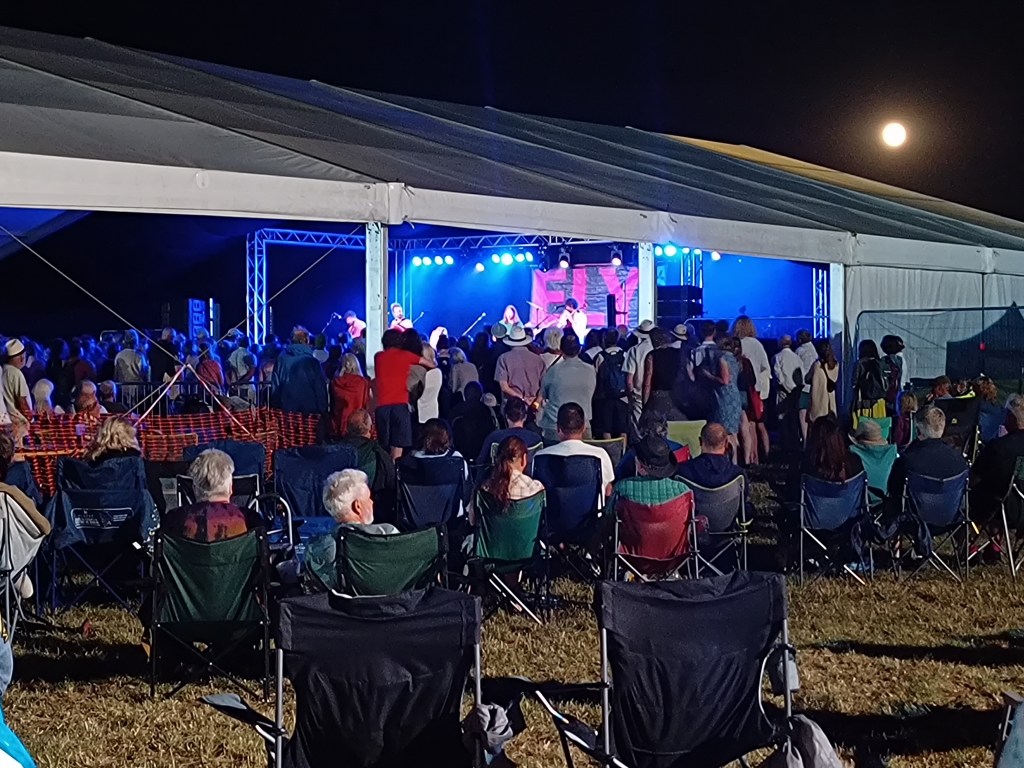
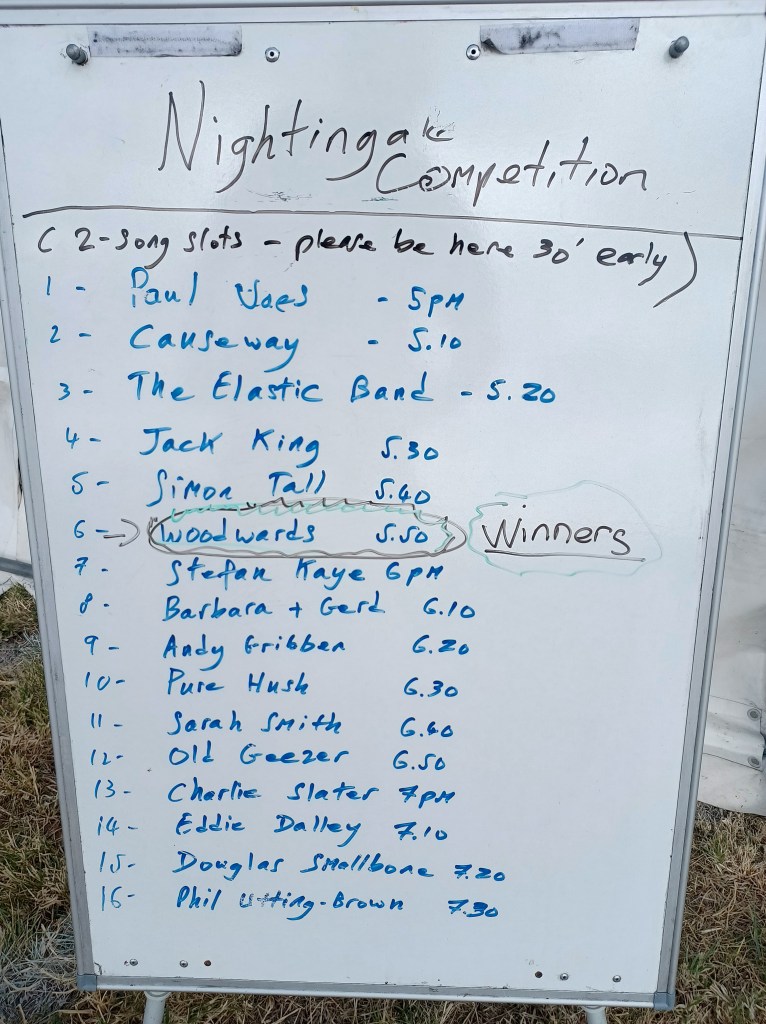
If folk music is the people’s music, as I still firmly believe it is, then the overriding mindset and spirit of the indelible movement is that of a musical community with a common language in sound and story telling expression. So, within those parameters it might seem at odds with the ethos for there to be a competitive element to any performances at a folk festival. But at first glance the Saturday evening of this thoroughly wonderful weekend jamboree appears to be staging that very thing on the Nightingale Stage, the ‘café style’ of the three stages here used for more intimate concerts and workshops. The Nightingale Competition allows sixteen unscheduled performers to sign up for two songs each after which the judges will deliberate and declare a winner whose prize is the chance to open up the Peregrine Stage, the large main arena with all the kudos of a showcase space and audience, on the Sunday morning. But far from a battle environment, there is a charming air of camaraderie to this whole session, singers and players united in a desire to encourage the best out of each other. Where some took on folk standards or singer-songwriter classics by the likes of Joni Mitchell, there was an inspiring selection of original songs on offer. In fact, it was one of these by Douglas Smallbone, an emotive song of personal trauma that not so much plucked the heart strings as smashed a power chord with them, that could easily have won the likeable Essex troubadour the night. That honour, amid other stiff competition from Barbara and Gerd (exemplary guitar work) and Old Geezer (solo vocals on a re-write of Ian Dury’s ‘Apples’) went to a hypnotising guitar and vocal duo called The Woodwards. All told, this was a wildly varied and captivating evening’s entertainment.
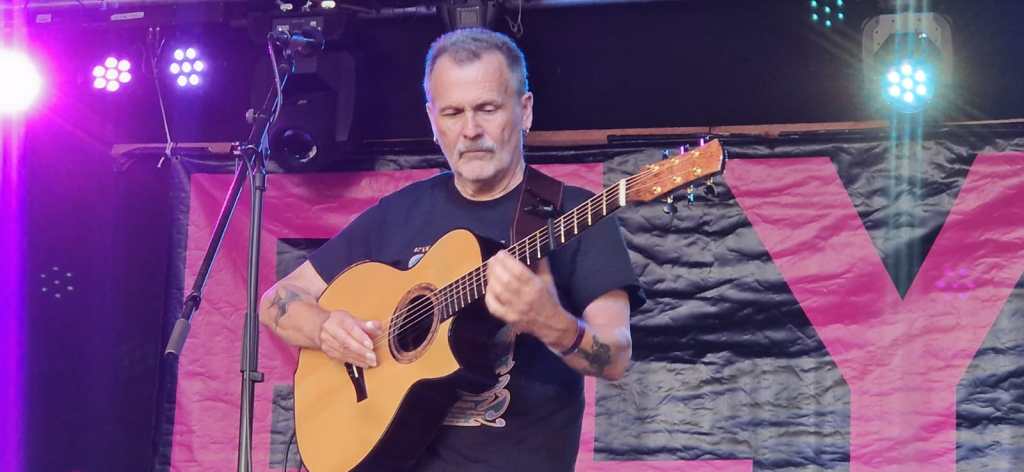
Douglas Smallbone tearing it up at the Saturday night Nightingale competition stage
This has been a big year for the Ely Folk Festival, not as big as next year when it celebrates its fortieth anniversary, partly due to a massive gap in the live folk market emerging with this year’s cancellation of the neighbouring Cambridge Folk Festival. I spoke to a lot of people over the course of this weekend who would normally be at Cambridge and whilst many would no doubt attend both, there are also some who readily admit to coming to Ely in Cambridge’s absence. They also freely acknowledge that this is a festival every bit as good as its higher profile nearby event and that they intend to return. The differences are negligible, Ely is certainly smaller but with three stages filled by programmes of music, a beer tent, food stalls, market stalls, craft and family activities, generous camping areas, reliable shuttle buses from town centre to festival site and a round the clock air of jigs, reels and folk jams breaking out there is absolutely nothing lacking in the festival experience at all. There is even a Morris display that descends onto the Ely city centre. Whereas Cambridge possibly feels the commercial pressure of needing some big-name headliners, Ely by and large focuses on loading their bill with folk and folk adjacent musicians of a strong pedigree. So, in that sense Ely is arguably the destination for the purists and hardcore folk fans out there. For my money though, it is simply a situation ripe for those with an open ear for great music. I caught acts I have loved in the past and uncovered new obsessions; there was rarely a moment across the three days when I could not find audible entertainment to excite the senses.
In a weekend over populated with highlights I shall attempt to reflect on the performers leaving the biggest impression on me; the first sounds I chanced upon were 2Steps 4Words, a five piece singing original material possessing a rough hewn rustic charm that reminded me of the Trader Horne sound I love on obscure early seventies records of a similar ilk, they sing of locations visited on travels around the East of England. My first main stage sensations were Kelvin Davies & Chloe Turner, and it turns out they are one of two festival Spotlight competition winners for this year (a new development in the annual talent contest which now has a space for solo and duo entrants alongside a separate challenge for bands). These two play a darkly absorbing blend of murderous early twentieth century ballads by people like The Carter Family, their guitar and vocals are sumptuous enough, but they are also joined by the festivals most dapper man in a heat defying three-piece suit on harmonica. Back in more intimate surroundings, Martin Baxter gave off an authentic air of British folk spirit, especially with a lesser familiar version of ‘John Barleycorn’ played on acoustic guitar along with an electric fiddle and Pat (seen earlier in the act opening this stage) on futuristic drum pads.
Kelvin Davies & Chloe Turner with dapper harmonica player accompaniment
On Saturday afternoon I paid my first visit to the Kingfisher concert stage for some affectional story telling in song from Suffolk’s EllYTree. I had pre-investigated this songwriter (real name Helen Woodbridge) before the festival and so was prepared for some deep, stirring material, accompanied by Fara on cello, and she did not disappoint. One stand-out was a story song about two siblings known as the Numero Brothers who could only communicate through numbers and were later separated never to speak again. Across the site at the main arena, The Cain Pit rocked up for the intense post-midday heat looking more like an emo band from twenty years ago than anything identifiably folk. Still, their ‘punkgrass’ sound was ready made for this moment and these North Walsham warriors were too. This is rockin’ hillbilly with a passing nod to the Stray Cats, and they play it fully intent on shaking down this sunstruck crowd. The audience even get slowly to their feet (some quicker than others) towards the end as we are encouraged to attempt a Charleston impersonation for ‘I Just Thought You Should Know.’ Warm, engaging, self-mocking (they describe fast picking banjo player as “born in a barn and doesn’t own his own pair of shoes”), it feels like Cain Pit have lit the fuse today. The light air they generate paves the way for the lush harmonies of Roswell Road to sing down from sunny, near cloudless skies. Theirs is an intoxicating brew that lives up to some of the big-name comparisons that accompany their billing, in this case Fleetwood Mac and First Aid Kit.
Monroe’s Revenge are a mainstay of the British bluegrass scene, a five piece who are now built around lead singer and folk veteran Dave Plane, they are both authentic, proficient, and easy on the ear. They are also a visual throwback too and I am not just referring to mandolin player Joe Hymas’s dungaree donning wurzel look, it is in the way they gather around the one microphone emphasising how this sound beautifully stitches together as one. And a bit of dark wit goes a long way too, when introducing a Stanley Brothers murder ballad which developed from ‘Girl Behind The Bar’ into ‘Little Glass Of Wine’ Hymas quips “it’s best to try both methods.” Then, following an evening of aforementioned competitive action, I finish this exhilarating Saturday evening with Danny & The Champions Of The World. Their winning blend of British Americana is in fact the closing act on what has been a themed night over on the Kingfisher Stage but experienced in isolation, this is also a life-affirmingly bright, spirited and energised burst of songwriting excellence worthy of top-billing on any festival stage where values like craft and passion are key. They also inspire the front rows to find their dancing feet in a set where the warm feelings are transmitting from audience to stage and back in equal measure. Back at this same stage the following morning I find Melody Coles playing more reflective but no less committed songs of a folky and personal nature in a set that later explodes into a thunderous guitar, cello and mandolin Fleetwood Mac and Kate Bush mash-up.
Danny & The Champions Of The World turn up the Saturday night Americana heat
Thunder may be in all our minds in such relentless heat, but Sunday afternoon thoughts are owned by two long established musical forces of nature. Firstly Ezio, on the Kingfisher is a lesson in song and presentation by a Springsteen/Dylan inspired writer who, as always, is accompanied by the wizard-fingered Booga on lead guitar. Ezio is long established as a Cambridge local treasure but the thing that knocks me out today is how much his composing is maturing into some rather fine work. He is irreverent and jokey in a very winning way (a song called ‘Indian’ he says was written in 2015 about the terrible state of the world before drily adding “I don’t think it made a lot of difference”) but still, when setting up a song about his daughter with droll anecdotes of heckling skinheads and the like being reduced to tears the last thing I expected was for it to immediately prompt that very same reaction in myself but boy, it really did, what a song. He pulls off that rare trick of catching real emotion in a magical combination of words, melody and dynamics. I conclude that, for all the emphatic love being thrown back at the pair as they play old favourites like ‘Saxon Street’ I believe that Ezio is growing as a writer with work surpassing previous high points and we should all pay close attention to this artist right now. Rock history is long enough for us to realise that the kind of writers in the DNA of Ezio’s music made incredible new records even in their most senior years, there is no reason for this man not to follow in their footsteps.
Ezio & Booga (left) who invited the singer to “pull some shapes”; he replied “I could but I might not recover!”
My second legend of the afternoon is found over at the main stage where Martin Simpson performs a solo acoustic set of high pedigree. He may seem a little jet lagged, stumbling over one or two lyrics, but this does not detract from the underlying class on display. The weariness is down to him just returning from three weeks in the US, a detail we learn in the spoken introduction to Woody Guthrie’s 1948 song ‘Deportee’ as Martin describes having to watch his words about the current US administration for fear he would not get back home. Martin continues to delight us with some touchstones from his deep back catalogue alongside other supreme renditions including a gorgeous take on the Richard Thompson composition ‘Down Where The Drunkards Roll.’ Later tonight we are treated to another side of Martin Simpson when, as part of The Magpie Arc, he is given license to flex as much fuzz and electric acid-folk guitar as he can muster. We also learn that this is to be Simpson’s final appearance with the group, something of a disappointment to me as I have only just discovered them and they are indeed a dream combination for anyone who, like myself, is in love with that late sixties, early seventies Fairport/Fotheringay folk-rock sound. They have it all, rhythm, fiddle, guitar sonics, electric folk jigs with prog leanings and sublime vocal contributions from Nancy Kerr. Too bad this is the last hurrah of this configuration (the implication from the stage is that the band are continuing) but thanks to Ely Folk Festival, at least I witnessed their wonderous twilight magic tonight.
Martin Simpson mesmerising a main stage Sunday afternoon crowd with just two hands and a voice
And so, as the festival winds down I end where I begin, in the intimate surrounds of the Nightingale Stage and the connection of some pleasing, folk purity in the shape of Jolene & The Leaves Of Life. Here again it is the rough edges that bring a human touch, Jolene at one moment gets a fit of the giggles and later takes four run-ups at a Ewan MacColl number but when she finds her feet, this set of material ranging from Fairport Convention to the Beatles is an absolute joy. Accompanied by Richard Partridge on upright bass and Monroe’s Revenge’s joke machine Joe Hymas on guitar and mandolin, Jolene Missing surely has the loveliest voice heard all weekend, one part Shelagh MacDonald another Anne Briggs, it is pure of tone and piercing in its conviction. This is a fitting end to a memorable festival in which, despite stiff competition from the warmest of sun-kissed weather, music has been the winner throughout. I cannot wait to see and hear what they serve up for the fortieth anniversary in 2026.
Melody Coles bringing warm harmonious waves of Stevie Nicks era Fleetwood Mac to the Kingfisher StageMonroe’s Revenge are the sound of early twentieth century bluegrass played with happy, engaging spiritDeparture time as the Sunday sun sets on a triumphant and memorable three day folk festival
We kick off with some emotive and sonic intensity this week as Madeline Kenney makes unflinching eye contact with the viewer through the camera lens leaving you in no doubt as to the conviction in her song. ‘Semitones’ addresses, in Madeline’s words, the moment when you “start to dread someone instead of love them”. This is so much more than a looking through you moment though, Madeline is in equal parts playful, mocking and savage in her assessments and absolutely revelling in the sonic palettes she uses to paint her vivid audio pictures with. This is taken from her fifth album, ‘Kiss From The Balcony’ set to be released on July 18th on her long-time label home Carpark Records but for now, get a taste for the main course with the intense ‘Semitones’.
Tombstones In Their Eyes – I Am Cold
Atop that crunching psych-rock bedrock, the insistent pounding rhythm and the slow smoky rise of the layered vocals there is something actually quite gorgeous going on here. There is a yearning to this song, an ache in the turbulence of the lyric that resolves with the chilling statement of the song title. As much as all psych influenced music can be traced back to the sixties, I am equally reminded of echoes from twenty-five years ago and a song like ‘Winterlight’ by Clearlake, something in the icy melodicism and sense of air and weightlessness leads me there. Either way, this is a quietly wonderous tune from these LA psychedelicists that is available now on Kitten Robot Records
Cochemea – Ancestros Futuros
Were Sun Ra still around today he would probably be making music that sounded something like this. This is both futuristic jazz and traditional in its respect of melodic patterns and tropicalia rhythms but whatever references one might be inclined to pin to this music, it is absolutely essential. It moves, it shifts, it rises, it falls, it bangs! This is sensational (I’m writing as I listen by the way, that’s probably obvious). Cochemea is a multi-instrumentalist and composer and this is the third and final part of a trilogy to be released in September on Daptone Records. It has been recorded with an octet of NYC percussionists along with Daptone alumni and is anchored in the cultural fabric that has nurtured him from the beginning through his Yaqui ancestry.
Allo Darlin’ – My Love Will Bring You Home
Here we have a cool recent live rendition of a rather Springsteen-like rocking ballad from Allo Darlin’s newly released album ‘Bright Nights’. This is a welcome return from Allo Darlin’ being the first new music released since 2014 after which they went on a decade long hiatus. Originally a London based outfit evolving out of a solo project built around the songs of singer Elizabeth Morris, their full band sound became a delightful amalgamation of lo-fi indie aesthetics and warm tune heavy guitar-pop writing. Happily, it is this that they appear to be tapping back into upon their return.
Big Thief – Incomprehensible
And here is another old favourite making a return, although on this occasion it is a band who have been rather prolific over the past ten years. Now listed as a three piece consisting of Adrianne Lenker, Buck Meek & James Krivchenia, Big Thief are set to release a new album called ‘Double Infinity’ on 5th September, via 4AD and if this teaser is anything to go by, their hot streak is showing no sign of letting up yet.
Lael Neale – All Good Things Will Come To Pass
I will finish this week with a live performance of a track from one of the best albums of the year so far, Lael Neale’s ‘Altogether Stranger’. At the time of release I wrote of this track specifically that it enters with some steam train chugging guitar as the repeatedly sung title line makes for a pure fairground delight of a chorus hook. The juxtaposition of celebration and loss is central to the magic at play in Lael Neale’s music and those elements of light and shade are set to the foreground here to stunning effect. If you are not onto this album yet, or the music of Lael in general then I would suggest that these oversights are rectified at your earliest convenience, why you could even start now with this.
In anticipation of this weekends Ely Folk Festival, which will be reviewed next week on this site, here are a few anticipated highlights from the line-up over the coming three days. The Magpie Arc are a cross-border folk supergroup featuring Nancy Kerr, Findlay Napier, Tom. A Wright, Alex Hunter and one of the folk movements all time legendary guitarists Martin Simpson (and how great is it to find him playing electric guitar in a group environment?). All I will say is that a band with such pedigree in its line-up winning favourable comparisons to Fairport Conventions ‘Liege & Lief’, after their ‘Glamour In The Grey’ debut album, has got to be worth some time and attention; I shall be watching and listening with interest.
Danny & The Champions Of The World – Sooner Or Later
Heading up an evening of Americana will be this wonderful collective, formed in 2007 after the break up of the band Grand Drive. They are based in London and led by singer-songwriter Danny George Wilson who presides over performances and writing that sail pleasingly close to the soulful and rousing spirits of Bruce Springsteen and Van Morrison. Not only that but their live sets are pretty damn life affirming and committed too so this promises to be a great one.
Fred’s House – Gaslight
One of the standouts among the many interesting local Cambridge acts performing this weekend are Fred’s House. They were formed in 2010 and their numerous releases have seen a gradual shift away from folk-rock origins towards a more pop-friendly sound leading to favourable comparisons to the likes of Fleetwood Mac and Crosby Stills & Nash. As this clip proves, these are likenesses that the band are more than capable of meeting head on, grabbing by the ears and shaking down into an enticing, groove friendly, melodic, song driven cocktail entirely of their own making.
Elly Tree – The Minotaur
Generously sprinkled among the more attention grabbing, rhythm and electricity pumping acts are plenty of traditional acoustic guitar and voice purveyors such as Elly Tree. It is important too that this side of a folk festival is not lost, this is where the roots of it all are found and, personally, I love those summer afternoons when an event such as Ely Folk Festival provides you with a tasty real ale whilst a tuneful troubadour entertains us with folksy story songs as heard here. Elly (real name Helen Woodbridge) is a singer-songwriter based in Ipswich, Suffolk.
Ezio – The Same Mistake
One of the real underground national treasures of the Cambridge scene for more than thirty years now is indisputably Ezio Lunedei, accompanied, as he has been all along, by the guitar shredder extraordinaire Booga. Weirdly, I think his name may have always held him back, you just do not expect such west referencing singer-songwriter mastery to be coming from someone whose name implies their music will be Spanish holiday disco music (or something). Put simply, if a song like ‘The Same Mistake’ were written by a Neil Young or a Mike Scott it would be regarded as a classic piece of melancholic, country-tinged, song writing genius for that is exactly what this is. Furthermore, Ezio has an armoury of similarly fine songs spread across his whole back catalogue.
The Cain Pit – Devil’s Side
Finally for this half dozen festival taster selection I am flagging up some thrilling punky bluegrass action that will be gate crashing the festival proceedings on Saturday night. Heading down from the mean streets of Norwich, the band were formed during the pandemic by cousins Daryl and Scott Blyth before expanding to a five piece. Their distorted blend of frantic banjo picking, double bass thwacking and raw pounding drum beating energy has seen them described as ‘punkgrass’, an appropriately original description for a sound with a thoroughly enticing approach. If you have never got a tattoo, that might change after you see The Cain Pit!
Taken from her new EP ‘Motions’ released on the Baltic Jazz label, this is a lovely soulful ballad to kick off the new music selections this week. Lois has been slow building a catalogue of jazz inflected songs via single and EP releases for a couple of years that started to catch the attention of 6music and Jazz FM radio DJs and deservedly so. She first came to more widespread attention with a version of The Clash’s ‘Should I Stay Or Should I Go’ on the Baltic Jazz ‘Re:Visioned’ album but it is her own evolving, genre-blending music that is most likely to lead to the answer ‘yes’, this is an artist who should definitely stay!
Dutch Interior – Sandcastle Molds
“My sandcastle molds all came without shovels”. Well we’ve all been there haven’t we? This one slipped past me earlier in the year but maybe I needed the summer months for the words to resonate? That is nonsense of course, unlike this song, a rattling, unsettling, shuffle that mixed inside the buoyancy and horn-burst fanfare of the sound is an uncertain melancholy asking the unanswerable questions. For a band that have been labelled “freak Americana” maybe that is the least that you would expect but let there be no doubt, this Los Angeles based collaborative writing collective are coming up with the goods right now.
Ryan Sambol – Friend Of The Show
This one has an unvarnished folksy singer-songwriter feel thanks to the way the harmonica is used as a lead instrument with the acoustic guitars and piano chords being thumped out all around amidst some gripping building of tension. There is a simplistic raw energy to this one, a primitive purity to an instrumental number that would make perfect talk-over intro or outro music for a radio show (I should make a note of that) but is worth a play in its own right anyway. Ryan released this album of the same name back in February, a record that has old-time blues sensibilities, a departure from the garage rock sounds he produced as front man of Texas cult heroes The Strange Boys in the early 2000’s
Stereolab – Aerial Troubles
The return of Stereolab this year has been a most welcome futurist-retro resurrection. As can be heard on this, the first offering from new 13 track album ‘Instant Holograms On Metal Film’ released on Duophonic UHF Disks and Warp Records, their signature groove driven electro adventurism remains switched on to full power. Founder members Tim Gane and Laetitia Sadier have imprinted their creative vision all over this new work which has led to another instalment of an impressive back catalogue with a real clarity of vision and purpose but above all, brilliant bittersweet music that still somehow sounds like no other.
The Flying Hats – Night Bus
It is brand new retro sounds of an altogether different stripe with this one as we enjoy a live studio version of this Flying Hats debut single. With these chilled soulful reggae and Caribbean vibes this has to be an ideal sound for the hot summer weather. It is taken from the bands album ‘The Return Of The Flying Hats’ released on the ATA Records label. The UK based band were formed by drummer Sam Hobbs and bassist Neil Innes, a cooking rhythm section who both have musical history as collaborators in the rootsy Afro-American dance scene.
Kendra Morris – Dear Buddy
So we retain the easy vintage soul textures on this weeks final selection, a jazzier offering and a ballad that carries some proper emotional weight. New York based Kendra has been ploughing this vintage pathway for a good fifteen years or more now, known for a songwriting style that has the grit and bite of real life mainlined into its veins, leading to favourable comparisons to the likes of Amy Winehouse and Sharon Jones. Like these late-greats, she too has an ear for the modern music world to match her old-school leanings, past collaborators include hip-hop collective Czarface but still it seems to be the straight ahead classicist compositions in her catalogue, as felt right here with ‘Dear Buddy’ (a tune from her latest three-song single ‘If I Called You’), that pack the firmest punch.
I don’t like cricket… I love it! That was the kind of mood I found myself in when compiling this months 75 track playlist. Put it down to the current heatwave gripping the UK, in conjunction with some delightfully gripping entertainment delivered by our much maligned summer sport, not to mention my laid back ice cold beer in hand disposition I adopted while watching it. Whatever, for one month I have abandoned my regular monthly mission of representing my current new musical discoveries and vinyl hunting obsessions and instead just put together a four and a half hour compilation of excellent summer tunes. Most of them have some summer sun front and centre, in the song titles or the subject matter (there are a good few surf tunes featured, only right as the world lost the genius of Brian Wilson over the past month), whilst there are others that simply have the feel of those hot months in the sound, style and tone. And of course, as this is a Fruit Tree Records playlist, there is some warm weather melancholy to be found amongst these selections too. And if you think there are some glaring omissions, well I just do not care that much for Bryan Adams or Will Smith and I cannot separate the association Mungo Jerry’s ‘In The Summertime’ has with road traffic accidents after it was used in an anti-drink driving advertising campaign years ago. That’s just me I guess, but I back these 75 pieces to work just fine as you pour yourself a tall cool one then kick back and enjoy.







 Fruit Tree Records