
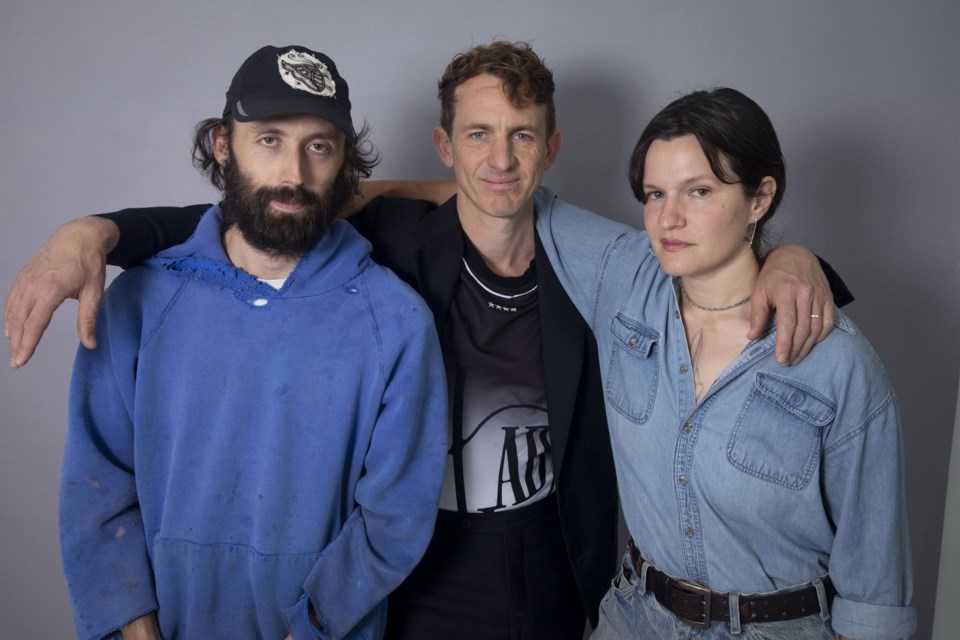
Big Thief – Grandmother
Taken from the bands sixth studio album ‘Double Infinity’, the now three piece Big Thief are seen here with a recent live TV performance of one of the stand out tracks from the album. It is the first song in the bands catalogue to feature a co-writing credit for all three members, Adrianne Lenker, Buck Meek and James Krivchenia. Although the lyric explores a theme of intergenerational emotion, directly addressing Lenker’s grandmother, I do like the way the “gonna turn it all into rock and roll” refrain points to a connection across the generations through music. Big Thief remain predictably brilliant on an album which serves to establish their prominence and position as one of the definitive and essential bands of our time.
Lisa O’Neill – The Wind Doesn’t Blow This Far Right
Whilst it may not be a lead in to a new album any time soon, this latest EP release from Lisa O’Neill is a welcome return from one of the central voices in folk music today. And just as the folk music of yesteryear would sing out the hurt, toil and human endurance faced by ordinary working class people, so too does Lisa’s music reflect with needle-eye precision the turmoil and knock on effects of the political battles raging around us today. ‘The Wind Doesn’t Blow This Far Right’ is a powerful hymn, a defiant anthem that rages against the capitalist regimes making up their own self-serving rule books in a stoically dignified, but no less enraged, manner. As emphasised in the traumatic video, laced with guest stars, the message feels like a line being drawn, the limits of where our cruelty to each other can go have been realised and now, maybe it is time for the pendulum to swing back the other way.
Vanity Mirror – White Butterfly
In a delightful amalgamation of the mid-sixties electric jangle of The Beatles and the irresistible primitivism of The Velvet Underground, Vanity Mirror conjure magic new sounds out of old recipes. Just let the shape of those verses take a hold and it is impossible not to summon thoughts of ‘Rubber Soul’ and the snaking melody of ‘Lady Godiva’s Operation’. The band are Brent Randall from Canada and Johnny Toomey from Los Angeles who used to play in a band called Electric Looking Glass but formed Vanity Mirror in order to develop a more lo-fi production with a songwriting style that references sixties style melodies. They have recently released their second album ‘Super Fluff Forever’.
Michelle David & The True Tones – Speak To Me
Well this is a banger indeed, a real super-spreader of a tune that takes up a long term residence inside your mind and simply refuses to recognise an eviction notice. This is what happens when you combine Motown production values, a strong song writing discipline and Northern Soul energy to a track, the sweet soul sounds of decades past still lives and breathes in 2025. The band themselves are a fusion of US and Dutch heritage who make music of a vintage soul and gospel persuasion that also manages to blend a gorgeous retro sound with a contemporary edge. This spiritual, open hearted floor filler has been released as a single this Autumn ahead of a brand new album called ‘Soul Woman’ set to arrive in February 2026.
Mood Bored – All The Time
This is a crunching indie guitar trio from the Netherlands who released this aching bittersweet gem from their EP ‘Too Much’, on Mattan Records, earlier this year. They represent a vibrant Dutch scene that includes names like Dutch Mustard and Tape Toy. ‘All The Time’ is especially notable for its grungy reverb and vocals that sing of burnout and existential pressure, asking “don’t you wanna break all the time?”. They already have some notable support slots under their belts, including Wolf Alice whose influence is apparent in the textures and pop inclinations, and their high energy performances have the desired attention grabbing effect.
Frankie Cosmos – Your Take On
Seen here in a punchy recent live clip, Frankie Cosmos perform a typically short and poetic track from their latest album ‘Different Talking’. They are an archetypal DIY indie band built around the music of Greta Kline who began the project in 2011, initially building a following through Bandcamp. They evolved into the larger ensemble featuring Alex Bailey, Katie Von Schleicher and Hugo Stanley and their music too evolved into a refined blend of bedroom pop and indie. Their latest was home recorded and self produced in upstate New York and refines the essence of Frankie Cosmos across 17 songs that rarely exceed the two minute mark. Greta’s presence has been felt across several other projects this year including ‘What Love Is’ by Soft Surface and a powerful version of ‘Hard Rain’ with the Kronos Quartet.






 Fruit Tree Records