Norwich is a city with a deep undercurrent of cool musical culture, especially if you dig around in the undergrowth, and this early spring Saturday evening certainly produced the goods for these hungry ears. The streets were fizzing with sound as hen parties and revellers spilled out onto the pavements from previously rustic pubs now pumping out four to the floor electronic dance music for the masses. But that is just the lacquered surface, the market‑tested throb designed for anyone itching to torch their disposable income on a lukewarm slurry of booze, uppers, decibels, and collective delusion—an environment where musical discernment peaks at a sweaty, unexamined “tune!” But fear not, just step past the pizza serving mask of Voodoo Daddy’s, toward the bar where the air hums with vintage rock ’n’ roll or sandpaper‑rough nineties grunge, and suddenly you are certain you’ve found the place where the night actually begins. Explore the downward steps behind an unassuming side door and you step into a room that, tonight, sparkles with the kaleidoscopic colour and swirling sound of music that has its roots among the audio space cadets of the twentieth century whilst firmly planting a flag in our 2026 soil.
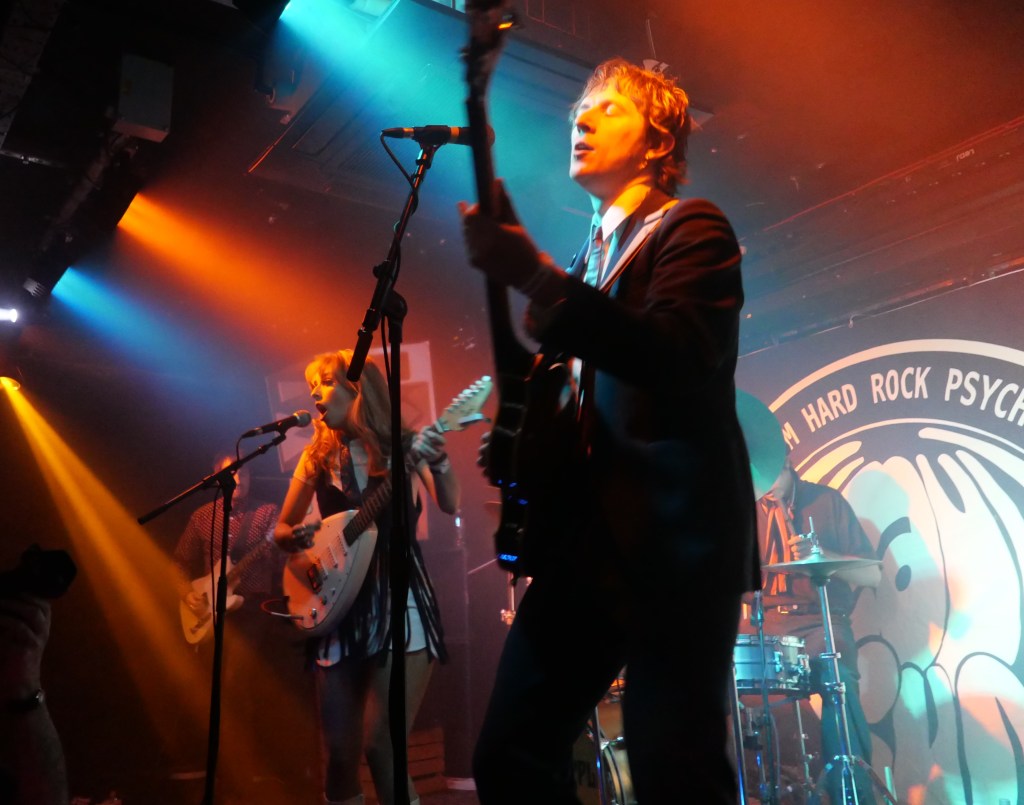
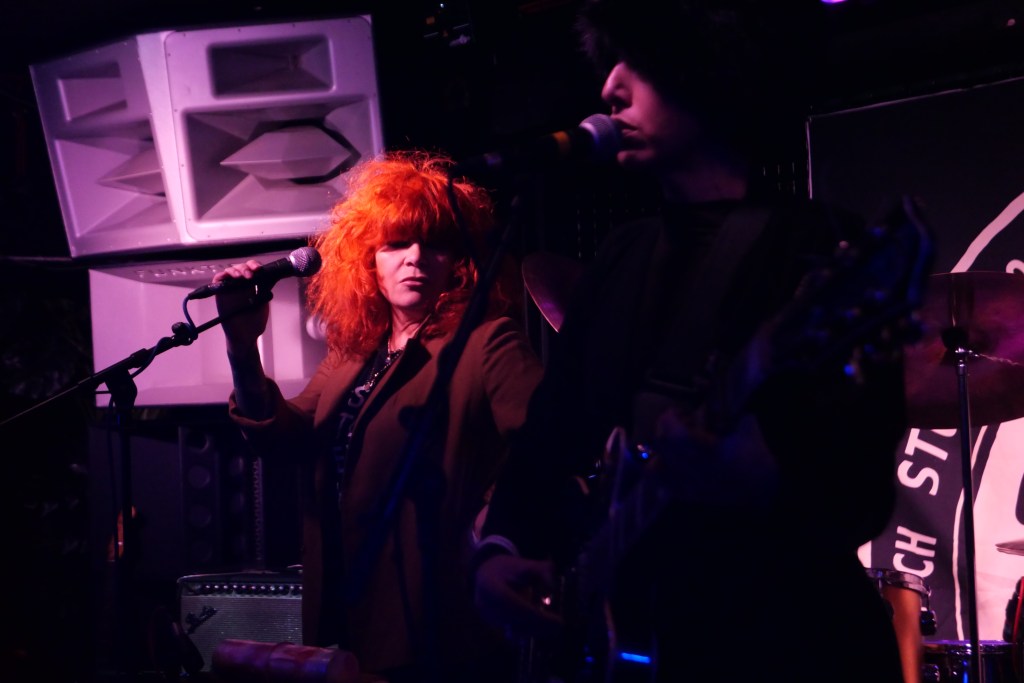
First up with the live thrills are a female duo with a bold, iconic look. Lassie are Emily Winng, whose thick mop of electric red hair glows like a fire under the stage lighting and Camille Davila, who fuses post‑punk sharpness with gothic elegance and a cool, Lennox‑like femininity. Their stage presence is a combination of mysterious and daring with a welcome dose of the personable thrown in; Emily turning a sound man directed request for less echo on her vocal into almost farcical slapstick. However, it is musically where these two are a serious proposition. Their harmonious vocals recall the dark angelic tones that Leonard Cohen used to appreciate so much in his backing singers, whilst Camille’s trebly guitar textures are both ethereal and the sound of an atmospheric vintage b-movie. Add to that Emily’s Bow Wow Wow referencing tribal drumming, which her partner occasionally doubles up on, with an inescapable mix of raw immediacy and deep song-based concepts and Lassie are a ridiculously enjoyable opening act. I later find out that they are currently preparing a debut album which, I confidently predict, will result in the number of voices singing their praises growing dramatically.
Lassie
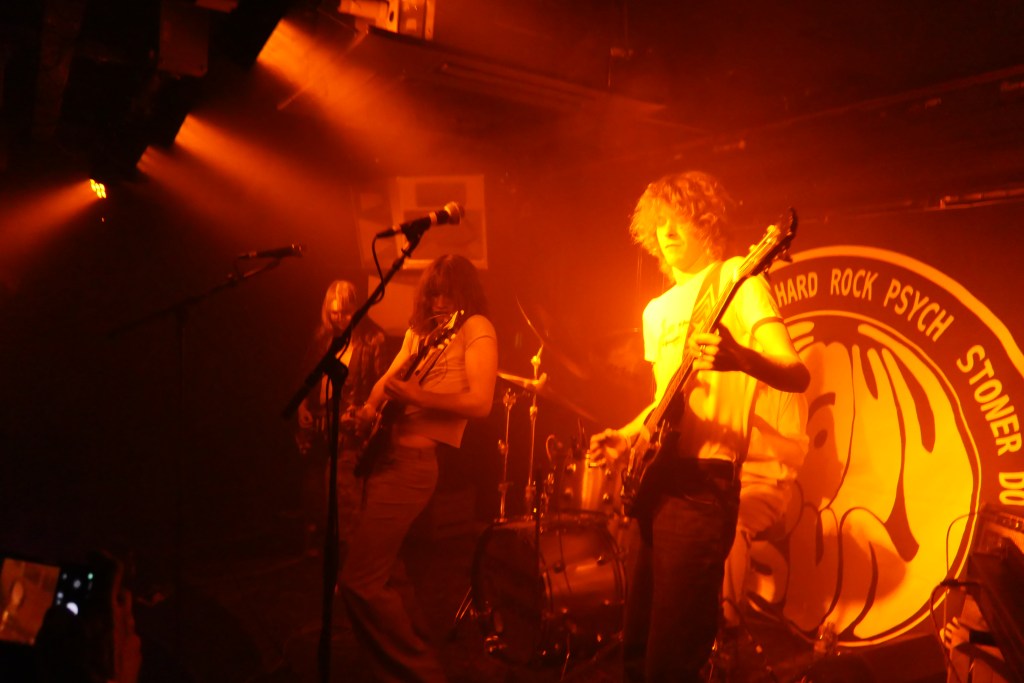
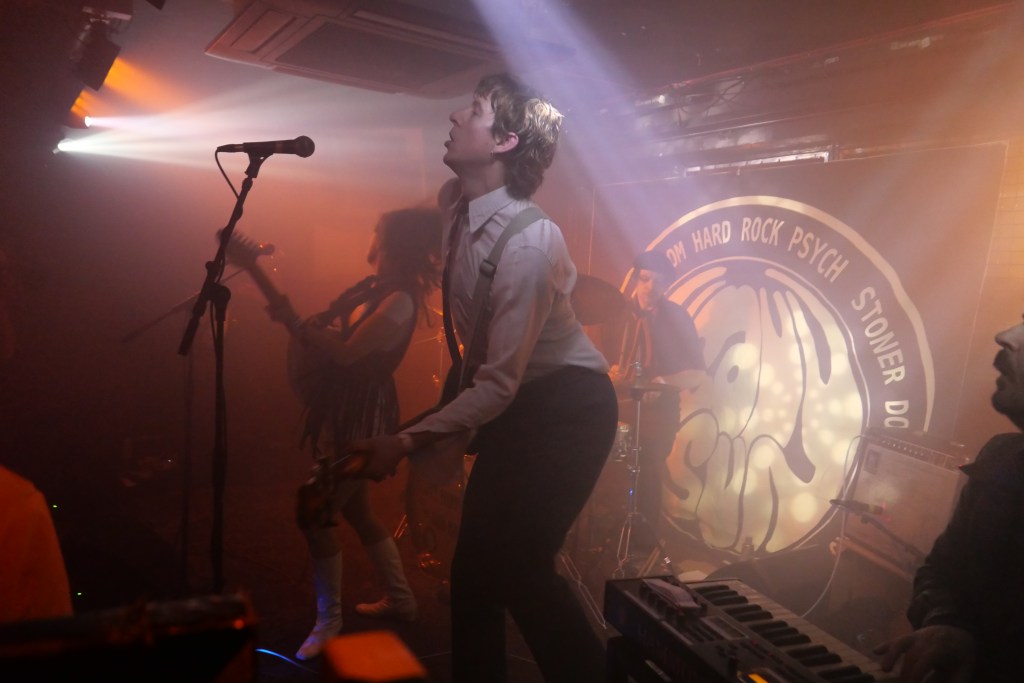
I loved the contrasts in the acts tonight and the most seismic shift was felt with the departure of Lassie and the arrival of Scott Hepple And The Sun Band. They are a four piece down from the north of England who in 2025 released their third album ‘English Mustard,’ produced by the analogue supremo of the recording studio, Liam Watson. Maybe it is this connection that sees Scott Hepple’s group described as a psychedelic, garage rock band but that terminology alone will not prepare you for the amplified assault this band unleash on their audience. They open their set like a demolition crew on double time, almost like they need to clear the decks of all residues before they can truly begin to build and concoct their magic. And magic there certainly is with these boys; they are playing music that stretches over valleys way beyond the three-minute garage template you might expect. This band play a hard-edged blues rock that has progressive threads and plenty of space for wild, stimulated instrumental wigging out. There is more than a touch of Free’s Paul Rodgers phrasing to Scott’s fronting of this band, that long haired, booze-soaked swagger is evident too but there is a voltage enhanced joy in expression with the Sun Band that is all their own. This kind of conviction can only come from a group with serious intent and, above all, talent.
Scott Hepple & The Sun Band
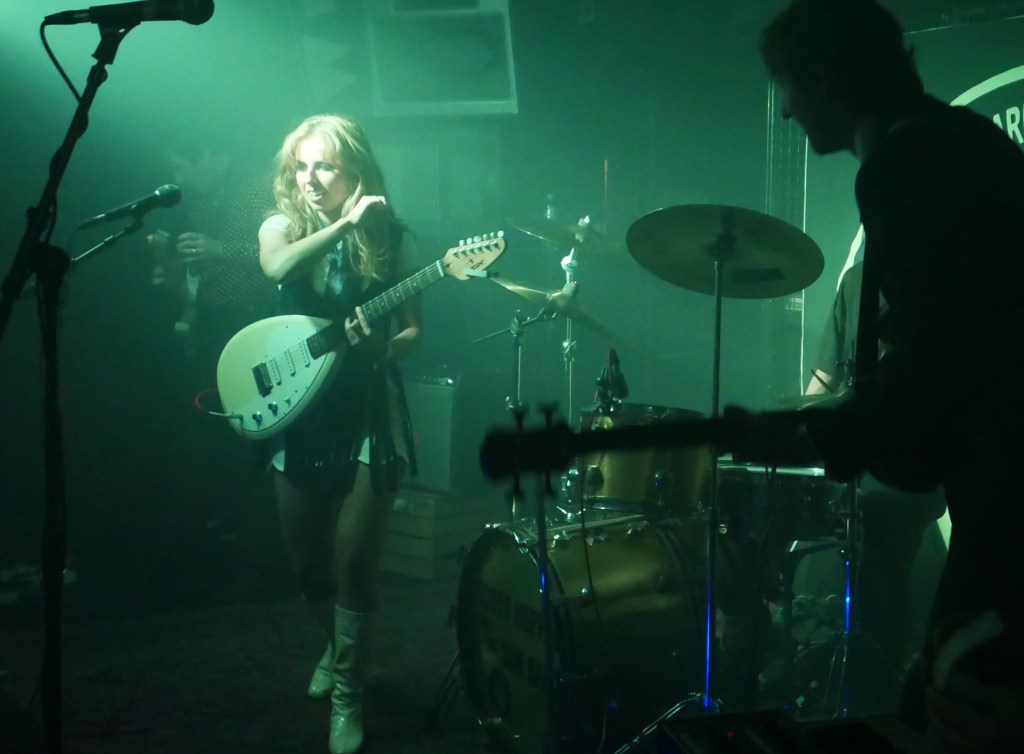
Tonight’s third and final band, The Crystal Teardrop, also released an album in 2025, and they too worked with producer Liam Watson to make ‘The Crystal Teardrop Is Forming.’ Everything about this group screams UK psych, from the Beatles Hofner violin bass guitar to the Brian Jones Vox Teardrop plectrum shaped axe of singer Alexandra Rose marrying perfectly with her go-go girl stylings, even the keyboard player looks like he has walked in from the set of an open university programme lecturing on chemistry. But do they have the music to back up the direction their fashion sense points them in? Well indeed they do, in fact, where their album hones their psych-pop vision into sharp focus, in this live setting they can see for miles and miles. I have not caught The Crystal Teardrop before so maybe this is normal for them, but it felt to me like they reacted to the volcanic eruptions of the previous band and took to the stage determined to tap into that same energy and passion. Evidently motivated as well as revelling in what was a fun-packed Saturday night for all of us, they lobbed their sixties‑psych glow straight into 2026, finding eager believers ready to carve out a place for it in the modern musical wilds. With the horrors of war in the backdrop to all our lives today, it felt apt too that they chose to climax their set with a motherlode of psychedelic freaking out. Somehow, the final sonic collapse of all the wondrousness that had preceded it, from all three acts, felt like a nailed-on representation of the moment we live in. It also reminded me that, no matter what else we are contending with in the outside world, brilliant music can frequently make it better. Look deeper, great things are always happening.
Words: Danny Neill Photos: Sophie Reichert
The Crystal TreardropThe Crystal Teardrop bring the psych to an explosive conclusion
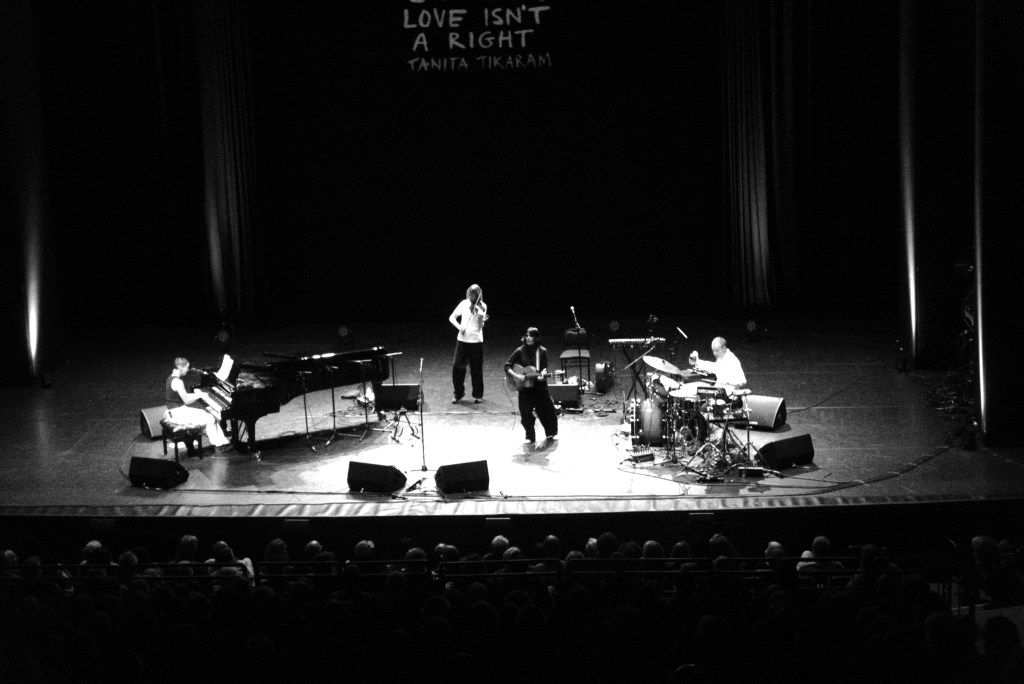
It is a lush concert hall location that tonight presents the Southeast of England instalment of Tanita Tikaram’s tour in support of her new album ‘LIAR (Love Isn’t A Right).’ This is a theatre setting that combines the grandeur of a concert hall recital, wherein the sublime acoustics are especially delightful, yet with a capacity of 740 seats retains an ability to encourage some intimacy between audience and artist. Whilst the overall impression of the venue is one of traditional design and construction there is an enveloping modern sheen too which, rather aptly, is also something that can be said of Tanita Tikaram’s music in 2025. These days she is some 37 years advanced from the diffidently bopping folksy songwriter that really did storm the UK pop charts all those years ago. Today Tanita is a wonderfully matured individualistic songwriter and singer whose sound demands the kind of attention and presentation this type of venue invites.
Tonight’s concert is a masterclass in baroque chamber pop, a fine grain of distinctly English music that can be heard in the most acclaimed art pop ever made (think ‘Eleanor Rigby’) and is also a key element in the celebrated high water marks of the 20th century singer-songwriter boom (think Nick Drake). That Tanita is tuned in to her musical vital ingredients extends to some fine song choices by other artists placing her in the realms of a connoisseur. In fact, it is a song by Nick Drake’s mother Molly that supplies the new albums title track and a sufficiently weighty melancholy as to appear handwritten for her latest set of songs. That same motivation to put the music first extends to this evenings live performance during which the star attraction is happy to occasionally disappear as a quarter component in a four-piece ensemble. Her first encore number is an exquisite cover of John Martyn’s ‘May You Never’ during which Tanita hands a substantial portion of the lead vocal over to cellist Zosia Jagodzinska. She is also proud to highlight her longtime violinist Helen O’Hara on a poised duo rendition of oldie ‘Valentine Heart’ (a song which the writer confesses was written about romantic love before she had any personal experience of such a thing). She also gives compositional kudos to drummer Marc Pell on the new ‘Sweet Feather And The Storm’, describing it as being born out of a jam between herself and the percussion maestro.
For me, one major positive take away from tonight’s concert was that the vast majority of those in attendance wanted to hear the music from the new album as much as the oldies. In fact, a spontaneous cheer erupted when the singer announced that this latest album would be the main focus. I highlight this because I have long been of the opinion that Tanita’s work has developed and grown into something quite wonderful over the years. I would particularly emphasise that her most recent albums are her best, so the necessity she feels to include a lot of material from that 1988 debut ‘Ancient Heart’ feels a little less essential to me. A curious thing seemed to happen back then, we saw a whole crop of talented female folk leaning singers emerge and enjoy significant chart success; this included people like Tracy Chapman, Michelle Shocked and Eddi Reader’s Fairground Attraction who all had their biggest mainstream success that year, despite carrying on to enjoy lengthy careers making increasingly wonderful music. Tanita has arguably suffered the most from an association with one specific era, but quite why this should be the case for any of the above is hard to pinpoint. Maybe the giant musical sea changes that swept aside the 1980s, the arrivals of dance, grunge, Britpop and the like, caused an avalanche of fresh excitement relegating the class of ’88 to the margins? If so, we are fortunate today that Tanita Tikaram still found a pathway to nurturing her writing and evolving to the sweet spot we find her in today.
So, in Saffron Walden we are treated to primarily music from 1988’s ‘Ancient Heart’ album and 2025’s ‘LIAR’. That acoustic guitar strumming nearly-dancer of yore is still in there, pleasing the one person rising to their feet to groove along with ‘Good Tradition’ every bit as much as I was spellbound by the cold punch and empty ache of ‘Lover Don’t Come Around.’ Some of her youthful offerings have aged extremely well, ‘World Outside Your Window’ nowadays has the elegance of a folk-pop standard while ‘Twist In My Sobriety’, with a trembly faster tempo, remains a darkly enigmatic song of which the singer herself admits “I have no idea what it’s about, and I wrote it”. To my eyes and ears though, she appears far more at home when seated at the piano facing her bandmates, wearing an inviting expression to get lost in this music. It is met with interest too, as Tanita picks the beautiful piano melody on ‘This Perfect Friend,’ the strings and percussion first smoulder then erupt into a whirlwind of bittersweet elegance. Equally a cover of ‘Wild Is The Wind’ (also performed on the album), which she acknowledges is inspired by the Nina Simone version, is absolutely mesmerising. Tanita closes the night at the piano too, lifting ‘I See A Morning’ from ‘LIAR’ and re-contextualising it as a soulful, gospel adjacent hymn to the hope ushered in at the dawning of a new day. It brings an end to a thoroughly immersive evening of music and underlines the point that, even if Tanita Tikaram hit a commercial peak four decades back, this has not impeded her pathway to an artistic peak in the present day. I believe she has realised just that and if you have not done so already, urge you to rediscover her work.
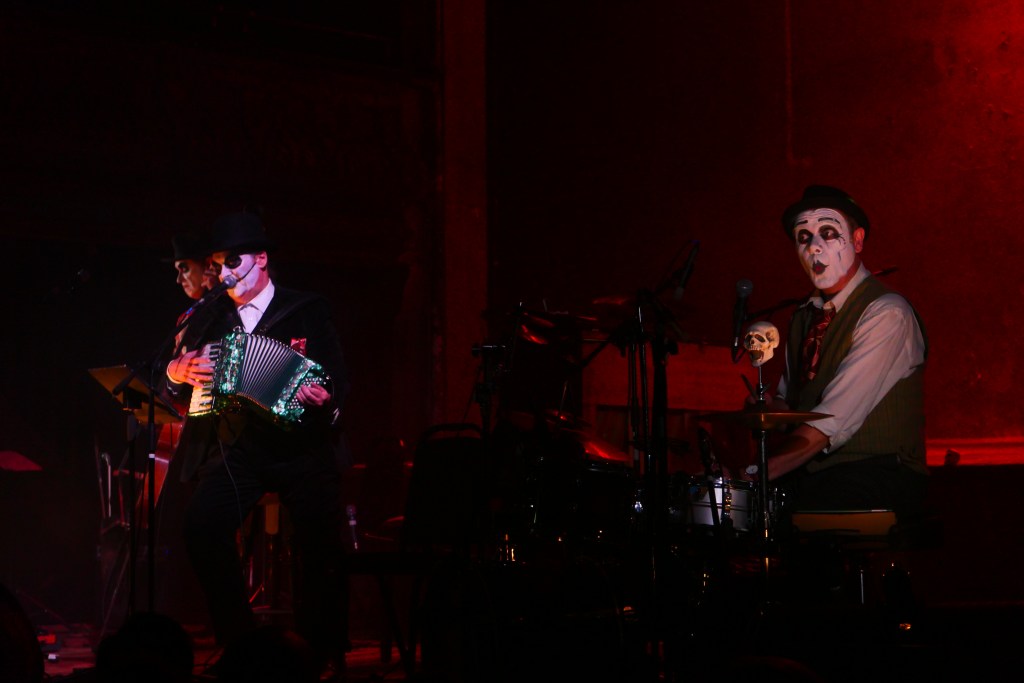
Just as the extremities of freezing cold can feel like burning, so too when a musical act plummets the depths of death, drugs, doom and despair so thoroughly they uncover light, irony, absurdity and humour, albeit of the gallows variety. The Tiger Lillies delight in the underbellies of life, they dig a pathway to empathy for the downtrodden and tap into the shattered beauty of the broken. Playing songs from their new ‘Serenade From The Sewer’ album, alongside a smattering of older catalogue classics, the pictures they paint of London pavement dwellers are vividly brought to life. Singer Martyn wrote these latest songs whilst reflecting about the pre-yuppie city life he saw from his window after first moving to Soho in the 1980s. He says the drug dealers, prostitutes, addicts and gangsters recall “a happy time for me. But it was tragic for many of the people I knew and watched from my window.” And so it is that a song about suicide, complete with sonic imagery embellishments like a theremin volt of electrocution, ends tonight with audience laughter. At the songs close our narrator reflects on his age and the decision not to end it all by his own hand with the deadpan words, “I remembered I will die soon anyway.”
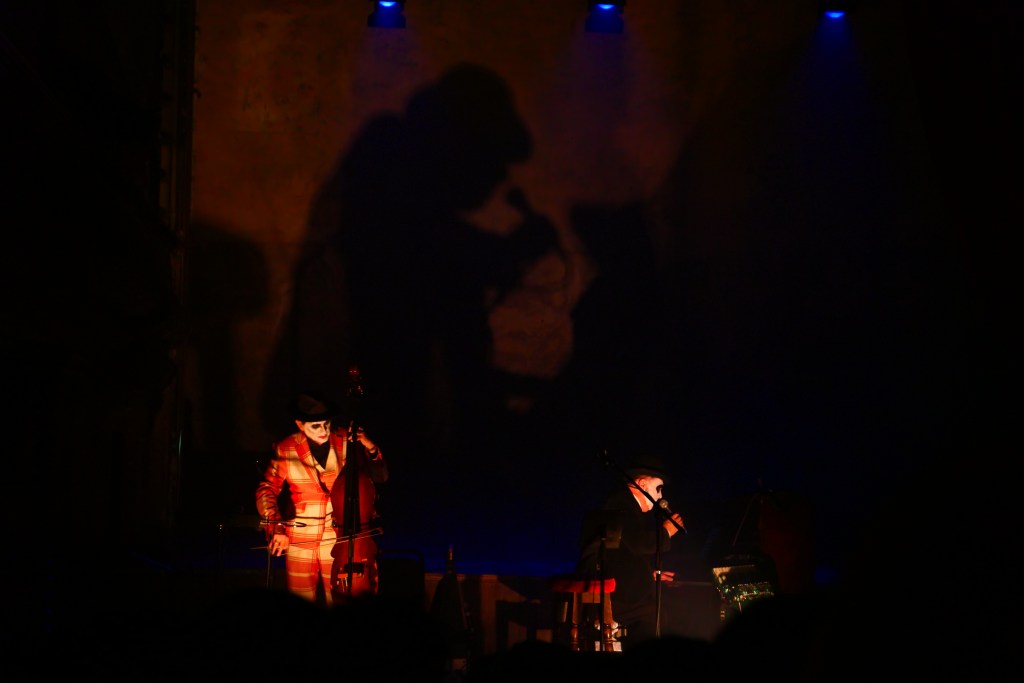
The Tiger Lillies have absolutely landed in the right space for the launch of their new LP, performing a long run of shows at East London’s oldest surviving Victorian music hall. With its exposed brickworks and timber galleries, this unique location is alive with ghosts of the past, its decadence evoking the spirit of the late 19th century era when the music hall and cabaret was enjoying its imperial boomtime. And much like the Tiger Lillies themselves, the place is reheating the flavour of an era long consigned to the history books. In fact, Wilton’s, named in 1859 after John Wilton took ownership of the site and transformed it into an entertainment venue, had spent the second half of the twentieth century in disrepair, coming close to demolition. And yet the turn of this century saw a restoration leading to revival and with their tombstone cabaret lurching forward onstage from the shadows, the Tiger Lillies presence feels like a perfect marriage of performer and situation. They take to the stage with this Saturday night audience hungry for musical stimuli presented with a unique theatricality, they are met head on by a band who appear to have absorbed every last drop of learned performance experience from the departed souls who stepped these boards in decades past.
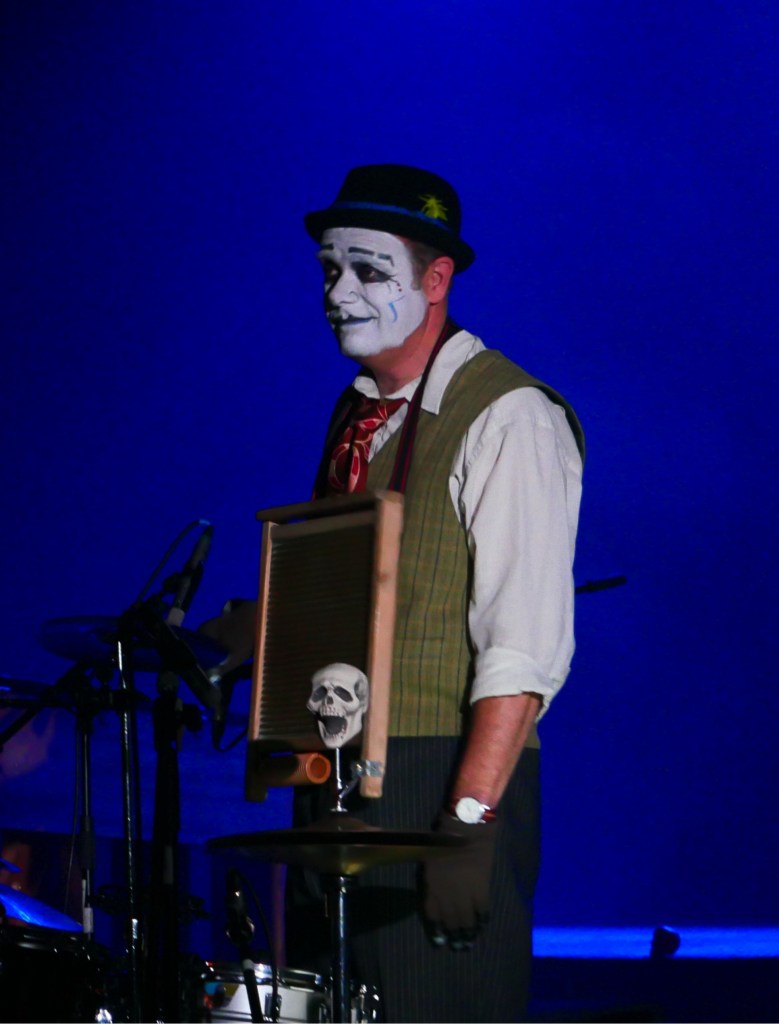
They are a three-piece consisting of central leader and composer Martyn Jacques, these days a judicial presence in the eye of the storm, performing mostly perched on a stall with accordion or hunched over his upright piano kneading mournful serenades. His writing has a canorous classicism to it, something which spectacularly enhances the cabaret element of his band. Then there is Adrian Stout on double bass, theremin and musical saw (for me one of the saddest sounding of all hand tools). He is simultaneously dapper and as menacing as an apparition emerging your wardrobe. His playing is both a low-end back bone for the ensemble and a veritable buffet of spookily, textural frills and adornments. Adrian’s presence is authoritative, which is in stark contrast to drummer Budi Butenop, who is the living embodiment of the joke about people who hang around with musicians. His stage presence is that of a man who needs to prove himself and is suffering for his art, to the extent that he can look panic stricken by and increase in tempo and fearful of a lull. In reality his playing is a masterclass in rhythmic performance art, to the extent that towards the end of a superb crash bang wallop of a drum solo, a silently observing Martyn and Adrian are almost purring with looks of approval.
Even though this trio’s style is macabre and surreal, they impossibly manage to mine disparate influences such as opera and the outsider art of cutting edge of punk. This is not to say they are aggressive, but the chilling white face paint they all adorn does give them an unsettling presence. It is a shield that makes The Tiger Lillies rather impenetrable, so they are free to express themselves within their dark ballads, waltzes and shanties of morbidity and doom. The intensity of Jacques is offset by the menacing falsetto of his singing voice, which is a tricky mannerism to maintain but he pulls in his classical training as a countertenor to execute a pitch that can slice a crowd in two with its conviction. These are songs that delight in the grotesque, they swim in a sea of morbid alienation and irrationality. The effect on an audience of desperate narratives rising up from the stench of the sewers, delivered by a senior man imitating the exaggerated voice of a Victorian child, can raise your hairs just as it sends shivers.
In tandem with the nightmarish horrors is a counterbalance of comedy too. Drummer Budi is something of a court jester, especially with the variety of clownish expressions he pulls. Tonight, a mobile phone goes off in an unfortunately quieter moment and he does not miss a beat in reacting with a look of sudden bemusement. Then when standing in front of his kit with a washboard around his neck, the body language is hilariously exaggerated naughty-step misery. Adrian too is an expert in the art of smiling insincerity and when both he and Budi join in forced falsetto backing vocals, repeating the refrain “stupid,” it is like we have entered the surrealist realms of a Hammer Horror musical on ice. Of course, amongst the older tunes played tonight the band play arguably their most notorious song ‘Heroin.’ With its “if you want to win, take heroin” centre piece lyric, it is a grand example of both irony and pathos being rolled into a gloriously infectious musical singalong. Later however, seated at the piano, Martyn Joseph lays bare all the human empathy and yearning for light at the heart of his writing with ‘Birds Are Singing In Ukraine.’ This 2023 hymn to the beauty of nature, overwhelmed by destruction from invaders, shows unwavering defiance amidst devastation. It does not deny the horrors but clings to hope, in so doing revealing the one facet of the Tiger Lillies music that is mostly submerged but is key to their vitality and clout; a sensitive character guides this band with heart and soul. Martyn does not need to end the song with a four letter send off to Putin, but he does so because he has a feel for theatre. He can sense that the Tiger Lillies have played this room like the modern-day vaudeville master’s they undoubtedly are, small wonder this crowd tonight demanded two standing ovation encores.
Scott Lavene is a modern-day Essex likely lad, a unique music vessel and a stylish composite of Mod, Two-Tone ska boy with a hint of Where’s Wally. He is an individualistic UK voice who belongs somewhere in the Ray Davies, Steve Marriott, Billy Bragg, Ian & Baxter Dury lineage. Singing cartoon snapshots of his storied life, tonight the audience are let in on a bit of family history; it turns out Scott’s Granddad was a famous jazz trumpeter. I had picked up lyrics referencing this in his music before, there is the line about his Granddad saying “never trust a town that doesn’t have a jazz club” in the song ‘Disneyland In Dagenham’ for example, but tonight he imparts this as a fact. Why would it not be? Well, if you take all the colourful back story Scott puts into his songwriting, then some details might seem a tad far-fetched. If all true, this man has an incredible autobiography in him at some stage. Earlier, he told another story relating to the opening lyrics of ‘A Bus In July’, admitting that “I really did live with a Moroccan armed robber”, the story unfolding to the point where he was also playing tennis with the crack head lawyer from Finchley featured in the songs second line. And if you follow these random Lavene threads you might also detect a love of custard, which makes the lyric about first meeting his future wife on a bus with a carrier bag full of the sweet creamy dessert all the more believable. He is potentially the epitome of an artist unloading real life into his art with grit and raw honesty. I suspect the Scott Lavene we are presented with in concert is not a fictitious creation, more likely an exaggerated version of the real self, for the man has such an acute ear for the absurd minutiae of daily life that his sense of what can pass as entertainment is probably pretty fine tuned too. That said, I cannot find any information about the jazz playing grandfather online, so who knows? Does it matter anyway? Scott Lavene is a magnetic, charismatic performer arriving off the A13, wheel spinning a vintage Volvo estate car loaded with a cassette deck full of great songs.
To hold on to the jazz connection, rightly or wrongly, for a moment, there is a subtle musicality at play here. Scott fronts it out as a plain speaker which distracts a touch from the often disarmingly melodic and colourful flourishes in his playing. The guitar style can slide into hot progressive explorations almost despite itself and the piano songs have a touch and tone full of tenderness and colour. Even his singing, when he allows himself to let go without obscuring the vocal with a slice of cheeky chappy ham, hits the spot with a purity of tone. Scott Lavene could be an Essex soul boy if he did not feel so riled by the pretensions, posturing, double standards and hypocrisies in the world around him. Music might be his font for expressing feelings, but it also gives him an outlet to let off steam about everything from electric cars, overpriced posh coffees, gentrification and the ignorant soulless leisure activities of the newly minted. Tonight in Cambridge, he opens up about his own inner conflicts, alighting on his previous disdain of the middle classes alongside the realisation that he might now be one of them. These days Scott tells us, in one of many extended introductions (he does enjoy a chat with his audience), that he lives in a house with a garden, adapting to little things like stairs on the indoors, lawnmowers and neighbours who bring home made brownies. All of which makes his take down of middle class problems, ‘Waitrose Has Run Out Of Lobster’ with its images of burgundy chinos rising up in resistance to the shortage and specifically Janet, who has bought them all to store in a large freezer, all the more delightful.
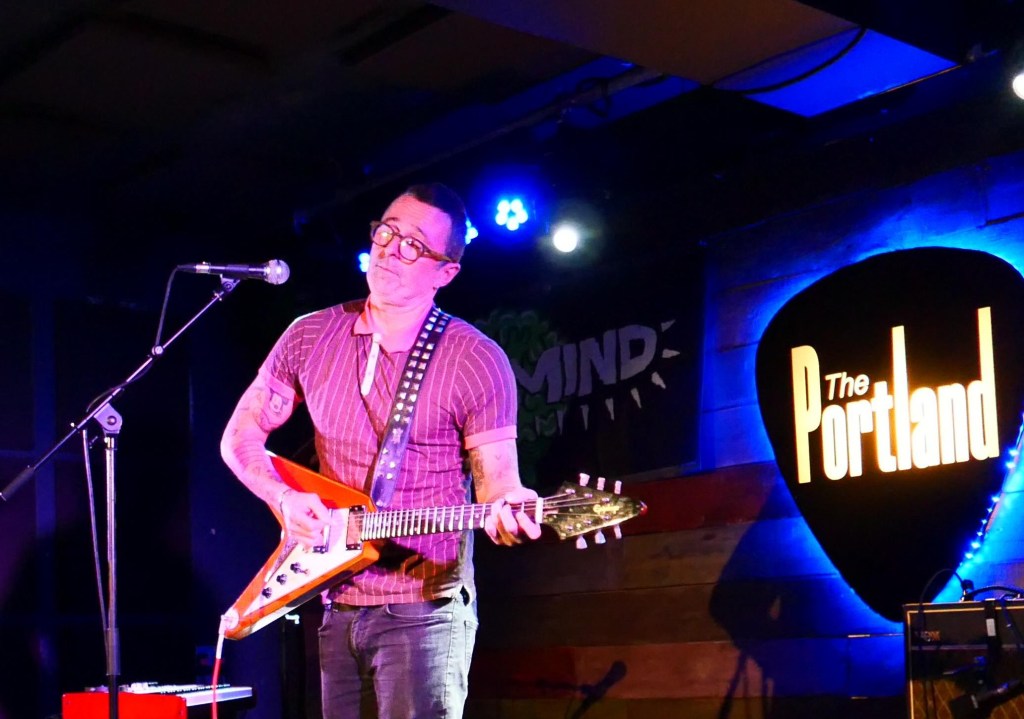
While running through a superb set that draws from latest album ‘Cars, Buses, Bedsits And Shops’ along with generous pickings from records released over the past six years (he had to play longer tonight after the support act pulled out), Scott tells the crowd about a couple in attendance who travel around to every gig, giving them a shout out on their wedding anniversary. Scott inspiring this kind of loyalty is understandable, it is plainly clear that he is not an artist dialling in an identikit performance night after night. He plays solo, mainly an electric guitar with effects and loops but also a few songs in a piano ballad form. The music is a living being with Scott; if he plays about with form like this every night, it can only be to keep that restless inventive mind of his engaged. The delivery of a Lavene signature tune is anything but set in stone. ‘Broke’ is the story of an Essex lad riding his luck on the poverty line, shadow boxing with self-mocking wit as he thinks on his feet among societies forgotten and ignored, finding comfort in his vices, unexpected twists of fate and life’s simple pleasures; tonight it is caressed into a wholly different beast to the trodden slog heard on record. It is more like an electric free-form hymn with Scott crowd pleasing, after the line about his girlfriend sighing the longest sigh he ever heard, by repeating an impressive breath zapping example of that very thing. Like many artists who leave a little too much of themselves on stage, a gigs merits may depend on where their head is at on any particular night. At the Portland Arms, Scott Lavene seems relaxed and engaged, a venue he once worked as a chef is now a well-attended first headline gig in Cambridge. He takes requests and we sense that here is a songwriter in a golden moment; riding an upward curve in his fortunes, both personal and artistically, but still close enough to the sharp edges of life that shaped him to thrive in the creative inspiration those experiences provide. Get on to Scott Lavene at your earliest convenience, he is the ultimate Essex man in music, proving that a much-maligned region still has so much to offer the culture.
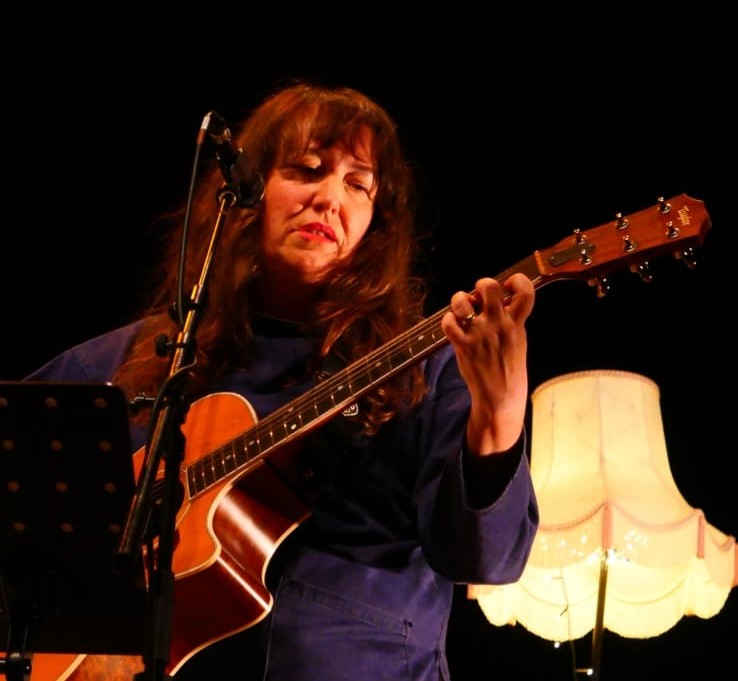
Kathryn Williams is touring her latest album ‘Mystery Park’ right now and it is a record lyrically woven with family and relations. Responding to the intimate ambience of her stage tonight, she is relaxed enough to share some details of the subject matters and the ideas that sparked many of the numbers into life. It has long been a chestnut for singer-songwriters to let confessions and real-life tales inform their music but thus far, in her quarter century plus career, Williams has shown a good deal more versatility than mere life ruminations. She has put out music inspired by Sylvia Plath for example, or an entire record of fictional hits from the perspective of a character in a Laura Barnett novel, so there is a strong writer’s mentality at play here. But, for the moment at least, feelings about ageing relatives and reflections on her past two decades as a parent seem to be the focus and I can sense there is a lot of empathy amongst her audience. I especially found one story about her teenage son exploring his own music tastes and sharing discoveries particularly relatable. I am certain I have taken the gloss off of my own children’s past selections simply by revealing that I am aware of the act in question and enjoy their music. Kathryn had a similar moment when her son’s excitement about finding Adrianne Lenker was dampened by his mother’s admission to loving her band Big Thief. Aside from the delightful story though, it also gave Williams an excuse tonight to play a gorgeous cover of that bands lilting ‘Change.’
‘Mystery Park’ features music that encourages William’s use of responsive studio arrangement and dramatic sonics. However, this is definitely a tour with a bare bones, stripped back aesthetic. The Junction’s seated room is a perfect situation for appreciating music of delicacy and reflection. Kathryn is accompanied only by guitarist Matt Deighton whose six string embellishments are subtle but vital too, he has a modest assuredness in his deep playing. Matt also happens to be the support act, his own music career stretching back even further than Kathryn’s to the Acid Jazz days of the early nineties. In fact, he has been an enigma over the years, the excellence of his music at odds with an apparent aversion to anything resembling self-promotion. He stumbles onstage tonight as if the idea that he might play some songs to this audience using the guitar he happens to be carrying had only just occurred. A few numbers later he ambles back offstage like a man realising he was only looking for the toilets before. Nevertheless, what happened in between mesmerized the audience despite efforts to throw us off with comments like “does anyone know these songs? I don’t.” They are acoustic ballads in name but, thanks to Matt’s background in soul and jazz alongside an all too obvious crate diggers passion for blending genre, they are fuelled with a warm natural energy. He caresses chord progressions that defy predictable resolutions and sings in a croaky upper register exhaling a soulful grit. In one restrained burst of ad-hoc playing Matt Deighton proves the reputation he acquired over the years has risen from a rare gift. It almost feels like had he ever pushed himself too proactively it would have been too much talent for the music industry to cope with, maybe all that modest self-effacement is a necessary defence mechanism?
Of course, the same could be said of Kathryn Williams. She is revealing a lot of personal matter, especially in these new songs. Introducing ‘Tender’ she wonders if there is anyone in the crowd who feels this way too, sounding like she would have a pitying understanding for individuals who are feeling too much, overwhelmed by the heightened responses their own senses inflict upon their emotions. Sharing stories about her father’s dementia and the dizzying effect parenthood can inflict upon your perception of time, it is reasonable to assume in different hands these subjects might become heavy going. But Kathryn has, from her earliest years, been a writer with a great ear for a melody and a reliable sense of the stirring touch a song requires to be both listenable and relatable. The angelic elevation in the chorus line of ‘Sea Of Shadows’ is a great example of this facility, it is a beautiful work that begins with recollections of her young child’s dressing up but then that refrain is ethereal, most writers cannot construct a beautiful lift in song like that. And the other thing Kathryn possesses is a deceptively powerful voice, do not be fooled by that gentle whispery front, this is a vocalist who can hold a room. Tonight, the material is almost entirely built around the new ‘Mystery Park’ album. Sometimes crowds hope for more older selections but with an artist like this, forming a live relationship with new material that also happens to be amongst her best, these are the shows that leave a special memory. They close on ‘Personal Paradise,’ a new song painting a picture of a domestic trauma that reaches for some abrasion in the arrangement. The singers mellotron is judiciously hypnotic whilst Matt detonates some violent electric fuzz to slice the serenity, but the previous ninety minutes of Kathryn Williams songcraft had already supplied more than enough fireworks to send us home wholly satisfied.
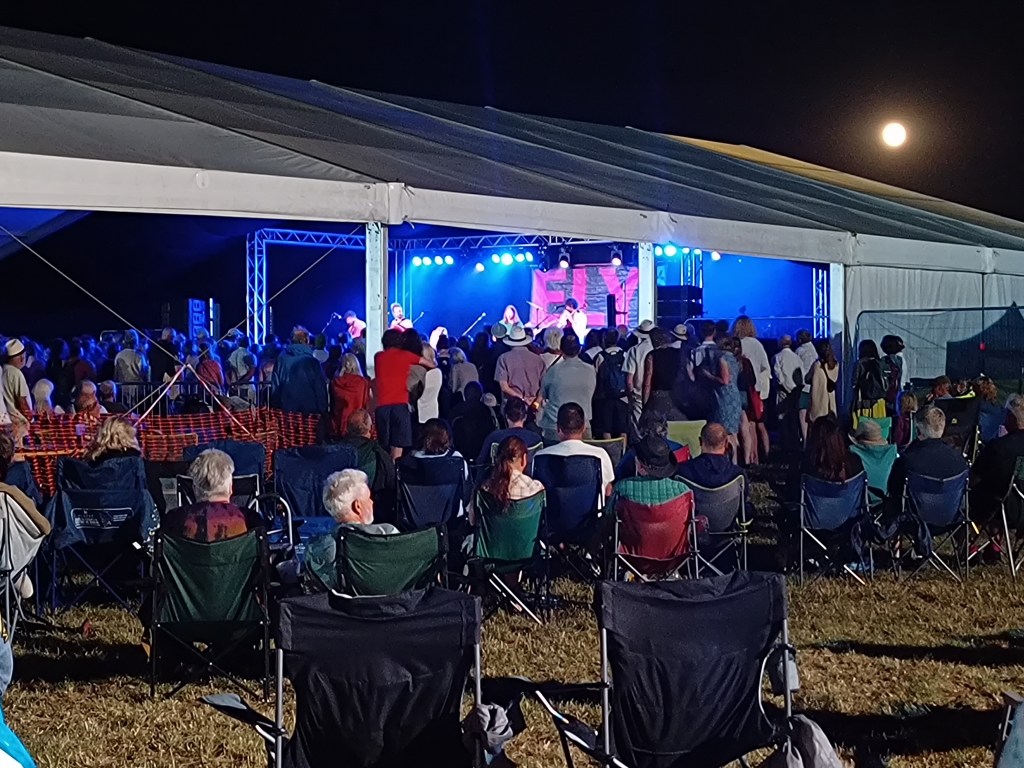
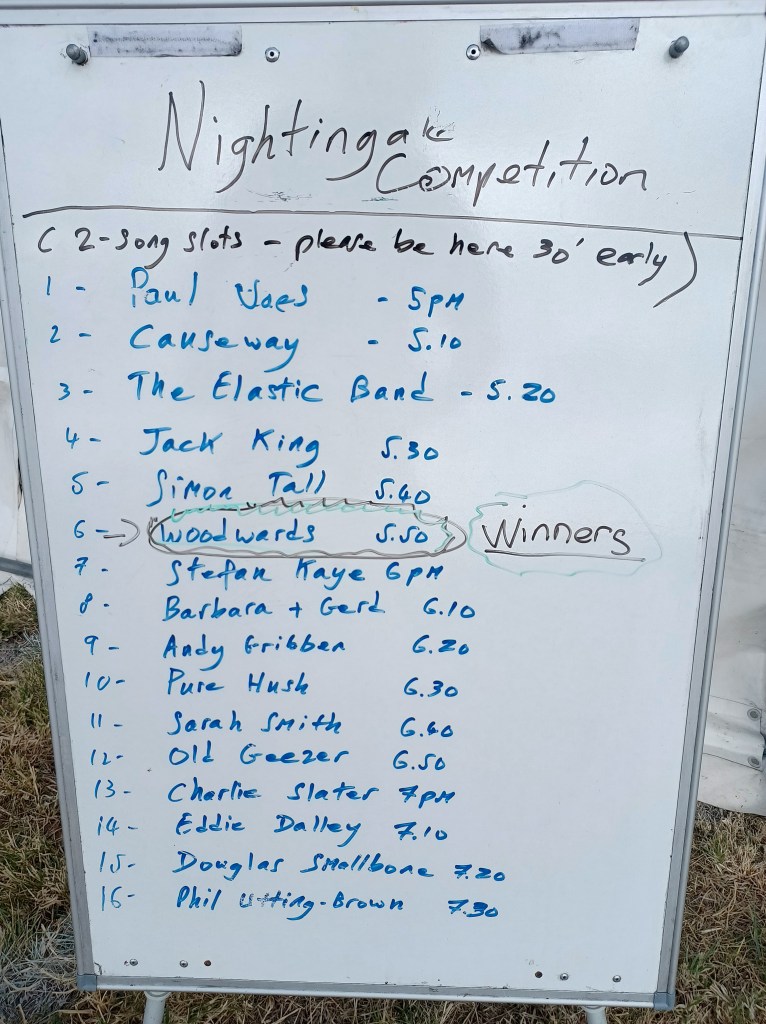
If folk music is the people’s music, as I still firmly believe it is, then the overriding mindset and spirit of the indelible movement is that of a musical community with a common language in sound and story telling expression. So, within those parameters it might seem at odds with the ethos for there to be a competitive element to any performances at a folk festival. But at first glance the Saturday evening of this thoroughly wonderful weekend jamboree appears to be staging that very thing on the Nightingale Stage, the ‘café style’ of the three stages here used for more intimate concerts and workshops. The Nightingale Competition allows sixteen unscheduled performers to sign up for two songs each after which the judges will deliberate and declare a winner whose prize is the chance to open up the Peregrine Stage, the large main arena with all the kudos of a showcase space and audience, on the Sunday morning. But far from a battle environment, there is a charming air of camaraderie to this whole session, singers and players united in a desire to encourage the best out of each other. Where some took on folk standards or singer-songwriter classics by the likes of Joni Mitchell, there was an inspiring selection of original songs on offer. In fact, it was one of these by Douglas Smallbone, an emotive song of personal trauma that not so much plucked the heart strings as smashed a power chord with them, that could easily have won the likeable Essex troubadour the night. That honour, amid other stiff competition from Barbara and Gerd (exemplary guitar work) and Old Geezer (solo vocals on a re-write of Ian Dury’s ‘Apples’) went to a hypnotising guitar and vocal duo called The Woodwards. All told, this was a wildly varied and captivating evening’s entertainment.
Douglas Smallbone tearing it up at the Saturday night Nightingale competition stage
This has been a big year for the Ely Folk Festival, not as big as next year when it celebrates its fortieth anniversary, partly due to a massive gap in the live folk market emerging with this year’s cancellation of the neighbouring Cambridge Folk Festival. I spoke to a lot of people over the course of this weekend who would normally be at Cambridge and whilst many would no doubt attend both, there are also some who readily admit to coming to Ely in Cambridge’s absence. They also freely acknowledge that this is a festival every bit as good as its higher profile nearby event and that they intend to return. The differences are negligible, Ely is certainly smaller but with three stages filled by programmes of music, a beer tent, food stalls, market stalls, craft and family activities, generous camping areas, reliable shuttle buses from town centre to festival site and a round the clock air of jigs, reels and folk jams breaking out there is absolutely nothing lacking in the festival experience at all. There is even a Morris display that descends onto the Ely city centre. Whereas Cambridge possibly feels the commercial pressure of needing some big-name headliners, Ely by and large focuses on loading their bill with folk and folk adjacent musicians of a strong pedigree. So, in that sense Ely is arguably the destination for the purists and hardcore folk fans out there. For my money though, it is simply a situation ripe for those with an open ear for great music. I caught acts I have loved in the past and uncovered new obsessions; there was rarely a moment across the three days when I could not find audible entertainment to excite the senses.
In a weekend over populated with highlights I shall attempt to reflect on the performers leaving the biggest impression on me; the first sounds I chanced upon were 2Steps 4Words, a five piece singing original material possessing a rough hewn rustic charm that reminded me of the Trader Horne sound I love on obscure early seventies records of a similar ilk, they sing of locations visited on travels around the East of England. My first main stage sensations were Kelvin Davies & Chloe Turner, and it turns out they are one of two festival Spotlight competition winners for this year (a new development in the annual talent contest which now has a space for solo and duo entrants alongside a separate challenge for bands). These two play a darkly absorbing blend of murderous early twentieth century ballads by people like The Carter Family, their guitar and vocals are sumptuous enough, but they are also joined by the festivals most dapper man in a heat defying three-piece suit on harmonica. Back in more intimate surroundings, Martin Baxter gave off an authentic air of British folk spirit, especially with a lesser familiar version of ‘John Barleycorn’ played on acoustic guitar along with an electric fiddle and Pat (seen earlier in the act opening this stage) on futuristic drum pads.
Kelvin Davies & Chloe Turner with dapper harmonica player accompaniment
On Saturday afternoon I paid my first visit to the Kingfisher concert stage for some affectional story telling in song from Suffolk’s EllYTree. I had pre-investigated this songwriter (real name Helen Woodbridge) before the festival and so was prepared for some deep, stirring material, accompanied by Fara on cello, and she did not disappoint. One stand-out was a story song about two siblings known as the Numero Brothers who could only communicate through numbers and were later separated never to speak again. Across the site at the main arena, The Cain Pit rocked up for the intense post-midday heat looking more like an emo band from twenty years ago than anything identifiably folk. Still, their ‘punkgrass’ sound was ready made for this moment and these North Walsham warriors were too. This is rockin’ hillbilly with a passing nod to the Stray Cats, and they play it fully intent on shaking down this sunstruck crowd. The audience even get slowly to their feet (some quicker than others) towards the end as we are encouraged to attempt a Charleston impersonation for ‘I Just Thought You Should Know.’ Warm, engaging, self-mocking (they describe fast picking banjo player as “born in a barn and doesn’t own his own pair of shoes”), it feels like Cain Pit have lit the fuse today. The light air they generate paves the way for the lush harmonies of Roswell Road to sing down from sunny, near cloudless skies. Theirs is an intoxicating brew that lives up to some of the big-name comparisons that accompany their billing, in this case Fleetwood Mac and First Aid Kit.
Monroe’s Revenge are a mainstay of the British bluegrass scene, a five piece who are now built around lead singer and folk veteran Dave Plane, they are both authentic, proficient, and easy on the ear. They are also a visual throwback too and I am not just referring to mandolin player Joe Hymas’s dungaree donning wurzel look, it is in the way they gather around the one microphone emphasising how this sound beautifully stitches together as one. And a bit of dark wit goes a long way too, when introducing a Stanley Brothers murder ballad which developed from ‘Girl Behind The Bar’ into ‘Little Glass Of Wine’ Hymas quips “it’s best to try both methods.” Then, following an evening of aforementioned competitive action, I finish this exhilarating Saturday evening with Danny & The Champions Of The World. Their winning blend of British Americana is in fact the closing act on what has been a themed night over on the Kingfisher Stage but experienced in isolation, this is also a life-affirmingly bright, spirited and energised burst of songwriting excellence worthy of top-billing on any festival stage where values like craft and passion are key. They also inspire the front rows to find their dancing feet in a set where the warm feelings are transmitting from audience to stage and back in equal measure. Back at this same stage the following morning I find Melody Coles playing more reflective but no less committed songs of a folky and personal nature in a set that later explodes into a thunderous guitar, cello and mandolin Fleetwood Mac and Kate Bush mash-up.
Danny & The Champions Of The World turn up the Saturday night Americana heat
Thunder may be in all our minds in such relentless heat, but Sunday afternoon thoughts are owned by two long established musical forces of nature. Firstly Ezio, on the Kingfisher is a lesson in song and presentation by a Springsteen/Dylan inspired writer who, as always, is accompanied by the wizard-fingered Booga on lead guitar. Ezio is long established as a Cambridge local treasure but the thing that knocks me out today is how much his composing is maturing into some rather fine work. He is irreverent and jokey in a very winning way (a song called ‘Indian’ he says was written in 2015 about the terrible state of the world before drily adding “I don’t think it made a lot of difference”) but still, when setting up a song about his daughter with droll anecdotes of heckling skinheads and the like being reduced to tears the last thing I expected was for it to immediately prompt that very same reaction in myself but boy, it really did, what a song. He pulls off that rare trick of catching real emotion in a magical combination of words, melody and dynamics. I conclude that, for all the emphatic love being thrown back at the pair as they play old favourites like ‘Saxon Street’ I believe that Ezio is growing as a writer with work surpassing previous high points and we should all pay close attention to this artist right now. Rock history is long enough for us to realise that the kind of writers in the DNA of Ezio’s music made incredible new records even in their most senior years, there is no reason for this man not to follow in their footsteps.
Ezio & Booga (left) who invited the singer to “pull some shapes”; he replied “I could but I might not recover!”
My second legend of the afternoon is found over at the main stage where Martin Simpson performs a solo acoustic set of high pedigree. He may seem a little jet lagged, stumbling over one or two lyrics, but this does not detract from the underlying class on display. The weariness is down to him just returning from three weeks in the US, a detail we learn in the spoken introduction to Woody Guthrie’s 1948 song ‘Deportee’ as Martin describes having to watch his words about the current US administration for fear he would not get back home. Martin continues to delight us with some touchstones from his deep back catalogue alongside other supreme renditions including a gorgeous take on the Richard Thompson composition ‘Down Where The Drunkards Roll.’ Later tonight we are treated to another side of Martin Simpson when, as part of The Magpie Arc, he is given license to flex as much fuzz and electric acid-folk guitar as he can muster. We also learn that this is to be Simpson’s final appearance with the group, something of a disappointment to me as I have only just discovered them and they are indeed a dream combination for anyone who, like myself, is in love with that late sixties, early seventies Fairport/Fotheringay folk-rock sound. They have it all, rhythm, fiddle, guitar sonics, electric folk jigs with prog leanings and sublime vocal contributions from Nancy Kerr. Too bad this is the last hurrah of this configuration (the implication from the stage is that the band are continuing) but thanks to Ely Folk Festival, at least I witnessed their wonderous twilight magic tonight.
Martin Simpson mesmerising a main stage Sunday afternoon crowd with just two hands and a voice
And so, as the festival winds down I end where I begin, in the intimate surrounds of the Nightingale Stage and the connection of some pleasing, folk purity in the shape of Jolene & The Leaves Of Life. Here again it is the rough edges that bring a human touch, Jolene at one moment gets a fit of the giggles and later takes four run-ups at a Ewan MacColl number but when she finds her feet, this set of material ranging from Fairport Convention to the Beatles is an absolute joy. Accompanied by Richard Partridge on upright bass and Monroe’s Revenge’s joke machine Joe Hymas on guitar and mandolin, Jolene Missing surely has the loveliest voice heard all weekend, one part Shelagh MacDonald another Anne Briggs, it is pure of tone and piercing in its conviction. This is a fitting end to a memorable festival in which, despite stiff competition from the warmest of sun-kissed weather, music has been the winner throughout. I cannot wait to see and hear what they serve up for the fortieth anniversary in 2026.
Melody Coles bringing warm harmonious waves of Stevie Nicks era Fleetwood Mac to the Kingfisher StageMonroe’s Revenge are the sound of early twentieth century bluegrass played with happy, engaging spiritDeparture time as the Sunday sun sets on a triumphant and memorable three day folk festival
















 Fruit Tree Records