
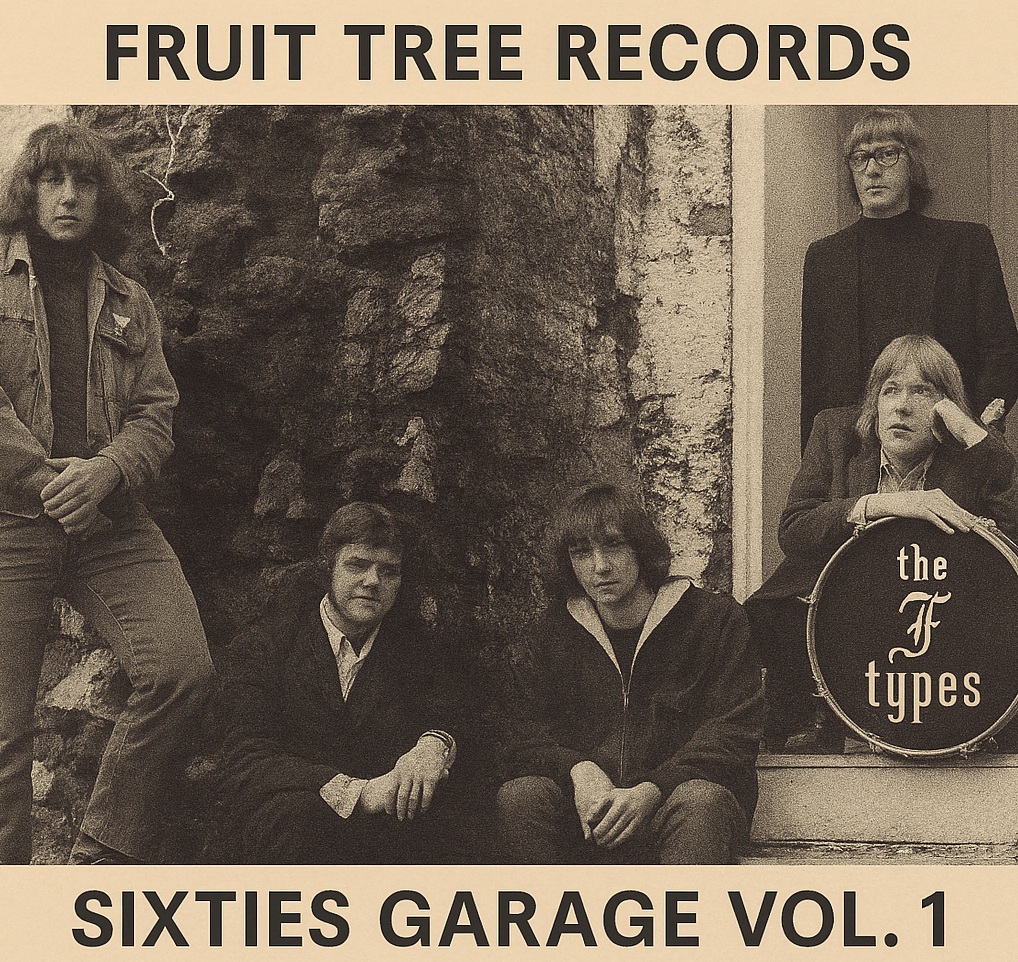
As far as this site is concerned, the world of record collecting and crate digging does not get more exciting and as frequently rewarding as it does when exploring the genre known as Garage Rock. Especially the original explosion heard in mid-1960s sounds rising out of the US, the UK and beyond. Much like Northern Soul of course, no one was categorizing these records at the time, they were a world wide manifestation of the musical revolution in the wake of The Beatles and Rolling Stones beat music energy whereby doors of creativity were kicked open for anyone with an electric guitar to crank up with friends in an actual garage. But the best thing for me with these (mostly) 45s is that, ever since the genre was shaped by the first Nuggets compilation back in the early seventies, the well has never totally dried up; to this day there are still killer, previously little known, garage tracks from the sixties belatedly rising to the surface. So this series of the Fruit Tree Records music mixes will be an appreciation of the classics and the rarities, all played together in a number of ongoing bumper fun episodes, of which this is the first. Dig it!
Tracks – Fruit Tree Records – Sixties Garage Vol. 1
‘Till The End Of The Day – The Kinks https://www.discogs.com/release/541882-The-Kinks-Till-The-End-Of-The-Day
Writing On The Wall – The Five Canadians https://www.discogs.com/release/3560954-The-Five-Canadians-Writing-On-The-Wall-Goodnight
My Friend Jack – The Smoke https://www.discogs.com/release/1380455-The-Smoke-My-Friend-Jack
Voices Green And Purple – The Bees https://www.discogs.com/release/1088018-The-Bees-Voices-Green-And-Purple
Come On Back – The Crying Shames https://www.discogs.com/release/1457228-Paul-And-Ritchie-And-The-Crying-Shames-September-In-The-Rain
I Can’t Do It – The E-Types https://www.discogs.com/release/7154070-The-E-Types-I-Cant-Do-It-Long-Before
Try To Understand – The Seeds https://www.discogs.com/release/8889538-The-Seeds-The-Other-Place-Try-To-Understand
Wanted Dead Or Alive – The Rogues https://www.discogs.com/release/10952958-The-Rogues-Wanted-Dead-or-Alive-One-Day
Beaver Patrol – Wild Knights https://www.discogs.com/release/9289647-The-Wild-Knights-Tossin-Turnin
Come In It’s All For Free – Eagle https://www.discogs.com/master/705697-Eagle-Kickin-It-Back-To-You
You’ll Never Do It Baby – The Pretty Things https://www.discogs.com/release/4104424-The-Pretty-Things-Get-The-Picture
Father’s Name Is Dad – The Fire https://www.discogs.com/release/1064073-The-Fire-Fathers-Name-Is-Dad
Grounded – The Syn https://www.discogs.com/release/1090656-The-Syn-Created-By-Clive
All I Want Is You – Shadden & The King Lears https://www.discogs.com/release/4854036-Shadden-And-The-King-Lears-Come-Back-When-You-Grow-Up-All-I-Want-Is-You
Tried To Hide – The 13th Floor Elevators https://www.discogs.com/release/11432206-The-13th-Floor-Elevators-The-Psychedelic-Sounds-Of-The-13th-Floor-Elevators
Bad Little Woman – The Wheels https://www.discogs.com/release/1862721-The-Wheels-Bad-Little-Woman
If You Still Want Me – The Four Fifths https://www.discogs.com/release/31574500-The-Four-Fifths-If-You-Still-Want-Me-Have-You-Ever-Loved-A-Girl
High And Mighty – The Society https://www.discogs.com/release/5600721-The-Society-High-And-Mighty
Little Girl Little Boy – Odyssey https://www.discogs.com/release/4508183-The-Odyssey-Little-Orphan-Annie-Little-Girl-Little-Boy
Need A Little Lovin – Foggy Notions https://www.discogs.com/release/9650215-The-Foggy-Notions-Need-A-Little-Lovin-Take-Me-Back-And-Hold-Me
Fortune Teller – The Downliners Sect https://www.discogs.com/release/3122156-Downliners-Sect-The-Rock-Sects-In







 Fruit Tree Records