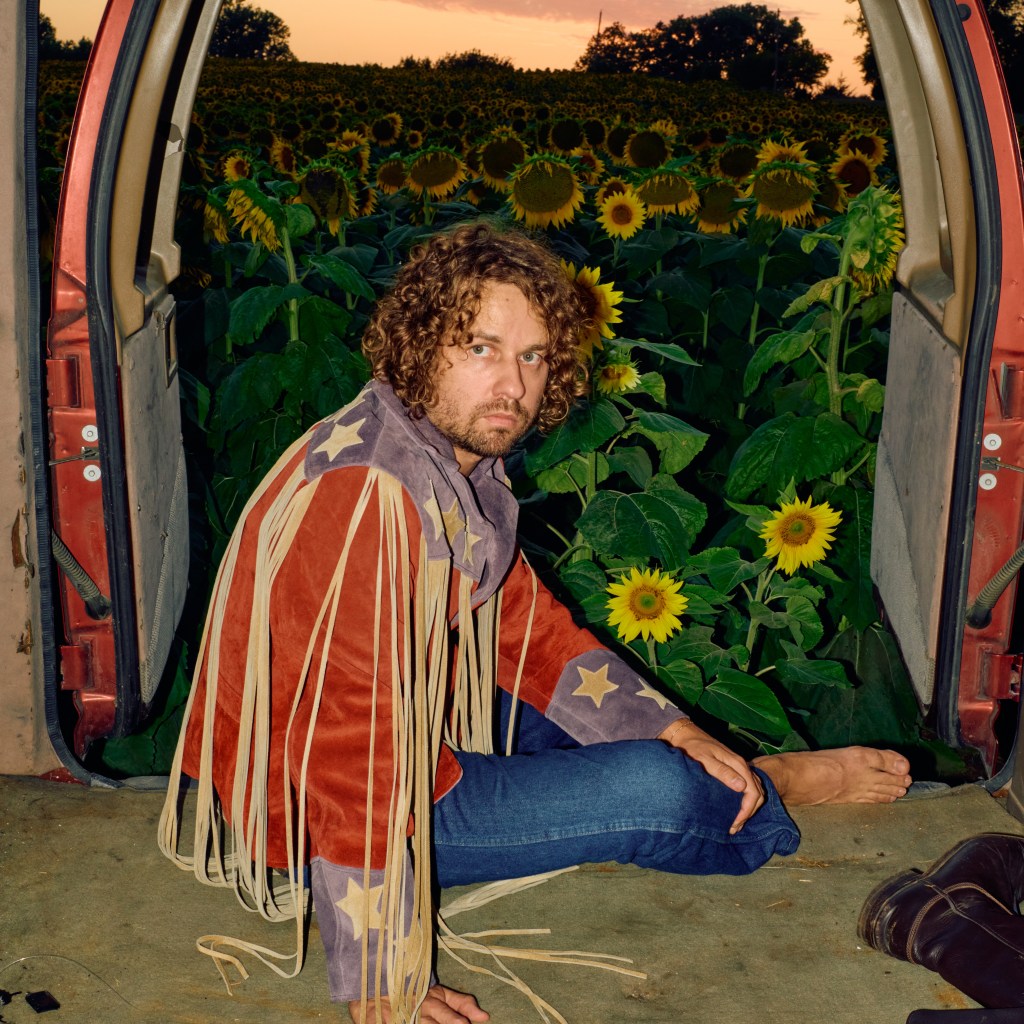
Ever since I first came across the music of Kevin Morby, some thirteen years ago with ‘Harlem River’ standing on the first step of his career ladder, he already felt like an artist with a voice honed and chiselled from years of performing. There was a maturity at play from the start enhanced by a style instantly marking him out as the natural heir to the space left by the passing of Lou Reed. It is not merely the semi-spoken delivery, especially as through the following years his voice also revealed a capacity for soulful explosions and uninhibited force, but there was an immediate purity to the sound. His felt like an expressive electric folk that needed some space to breathe, there was nothing calculated or artificial about the music of Kevin Morby, it needed a spark of ignition from the natural elements to fire itself into life. Of course, the prompt for inevitable comparisons to heavyweights like Reed and Bob Dylan was the lurking presence of mortality in Morby’s songs. Whether dwelling on the finality of death, examining the search for a God as a crutch to existence or sinking into deep introspection as the souls of dearly departed relatives speak via ancient photographs, Kevin has rarely shied away from the notion that death is a part of living.
And so, it continues with this latest fine album ‘Little Wide Open,’ although the man himself readily admits there are more reflections on love to be found on this record too. His domestic happiness with partner Katie Crutchfield (also featured on these pages in her guise as Waxahatchee) is alluded to alongside deliberately referencing the strangely compatible yet conflicting lifestyles they experience as a couple. This appears to be sung about during the title track, of which Kevin had this to confide ahead of the release. “It’s about the two of us being songwriters. The pros and cons. The complications. A crazy lifestyle of us each crisscrossing the world.” Nevertheless, true to form, the preoccupation with lifespan, passage and the random inequalities of fate have a place here and Kevin, as usual, plays the card with a gentle, empathetic touch. The poignant song ‘Bible Belt’ alludes to a 2021 tour stop when a young couple driving to his Denver show crashed; the boy died, the girl survived, and he reached out to her while she was in hospital. A year later, playing the Bataclan in Paris (a venue marked by the horrific terrorist attack that killed ninety people) he looked into the crowd and saw her, standing beside the boy’s mother. They had travelled all that way to see him. The sight jolted Morby out of his expectations for the night, turning the room into something tender and solemn. “It was very sweet to see them,” he says before reflecting that the boy died trying to reach his show. “It’s insane. But it happens. It’s a numbers game.”
The most tangible evolution in the music of Kevin Morby on display here is how he seems to have hit a satisfying balance between the hurt and the hope. He may be willing to ride in tandem with the darkness but the sense of squeezing every available drop of awe and wonder from the experience is not absent either. The Lucinda Williams monologue during ‘Natural Disaster’ lays some hard truth out on the table before Kevin re-emerges as the voice of reassurance. Then he unleashes the most thunderous of extended closing codas, building the pace and encouraging his guitar to carve shapes in the clouds. ‘Javelin’ is particularly rousing as well, built on a propulsive bass line and a shuffling drum rhythm and the lyric makes the idea of being alone in the middle of middle America feel like a situation alive with curiosity. That is the big wide open of Kevin’s minds eye right there, a landscape that tugs both ways; part devotion and part ache. It is the big sky and the humble lives below it, the Midwest that raised him on restraint and familiarity, on solitude and soil. A country he carries within him, whether he wants to or not.
As for the personal details, well if you want a snapshot of a songwriter pouring his life onto the page look no further than ‘Die Young.’ If the opening lines about singing on a stage and missing his woman are not enough then how about the tune itself? The song plays like such an intentional pastiche to Waxahatchee’s ‘Right Back To It’ it could almost trade as an answer song. Here again though, our man is inclined to look up, not down, re-iterating the refrain “thank God that we didn’t die young.” And so it goes, across this whole album, wherein Morby folds every strand of his past work into something sharper and more whole; the Dylan‑tinged realism, the fatalistic meditations, the dust‑bitten folk‑rock grit, and that strange spiritual voltage he summons when he needs it most. The result is his most cohesive, fully realised record yet; this whole work is the sound of an artist finally pulling all his weather systems into one sky.
Danny Neill
Get a physical copy of the album here: https://amzn.to/48Usyo4