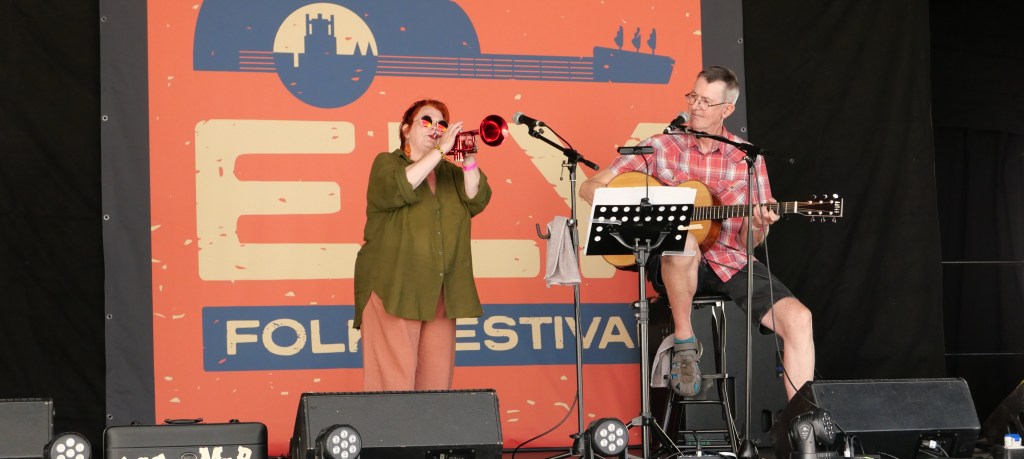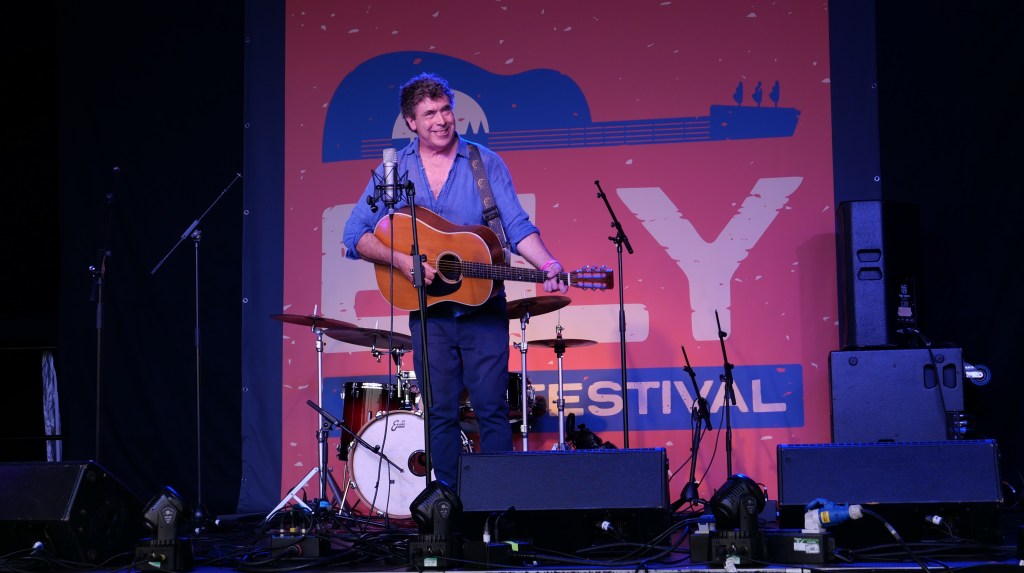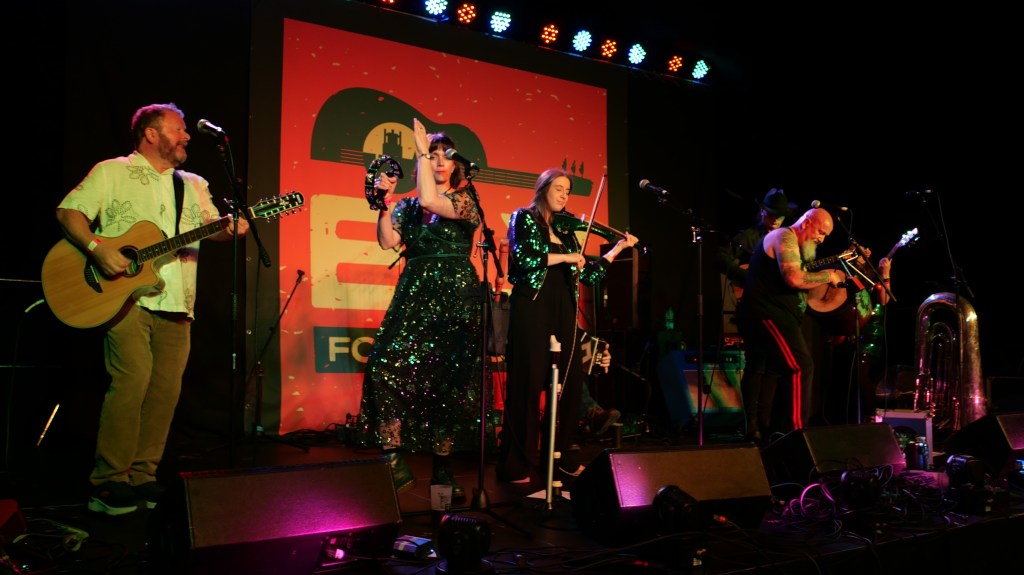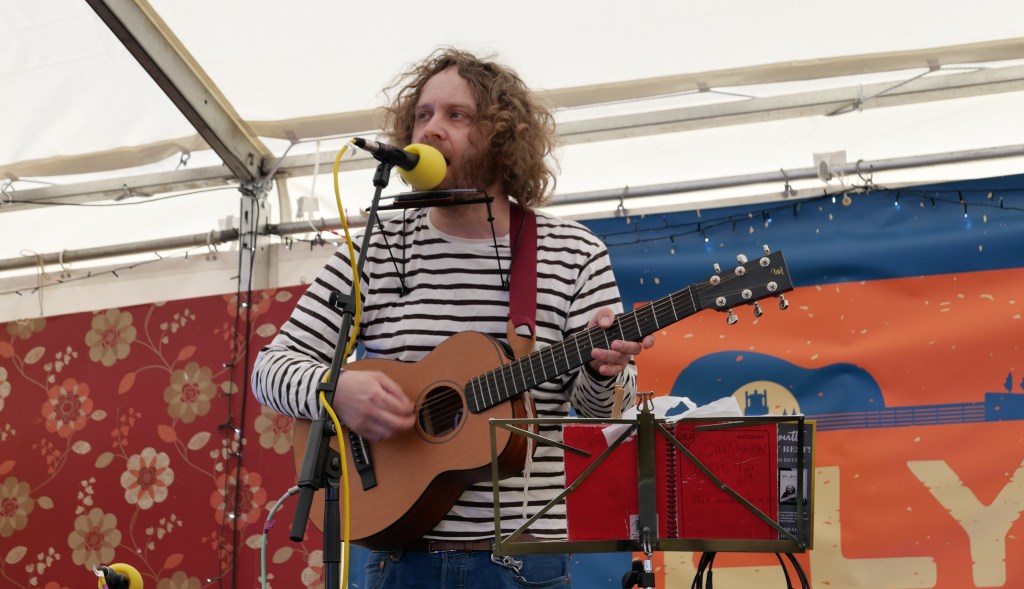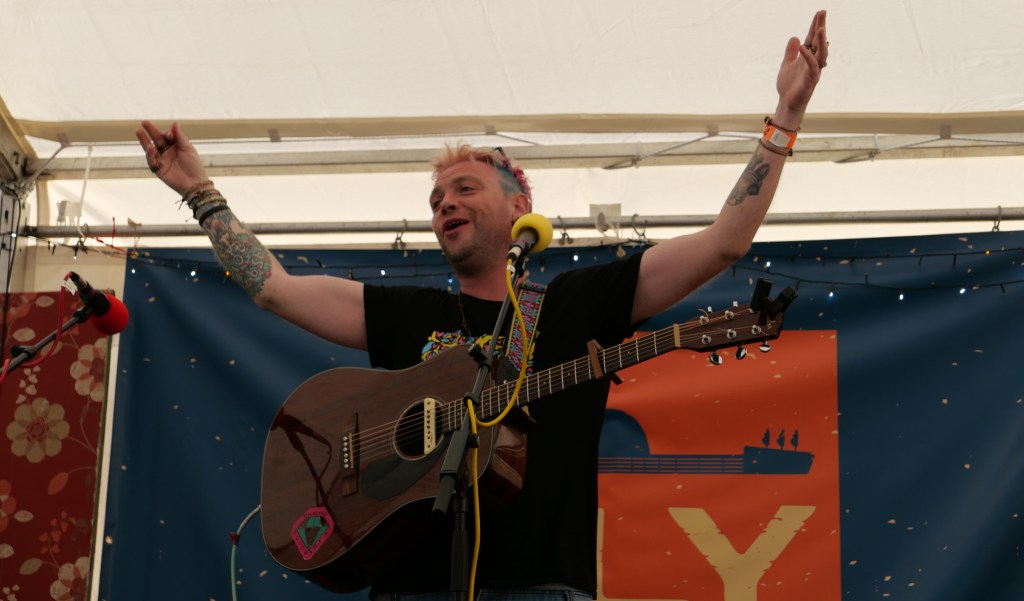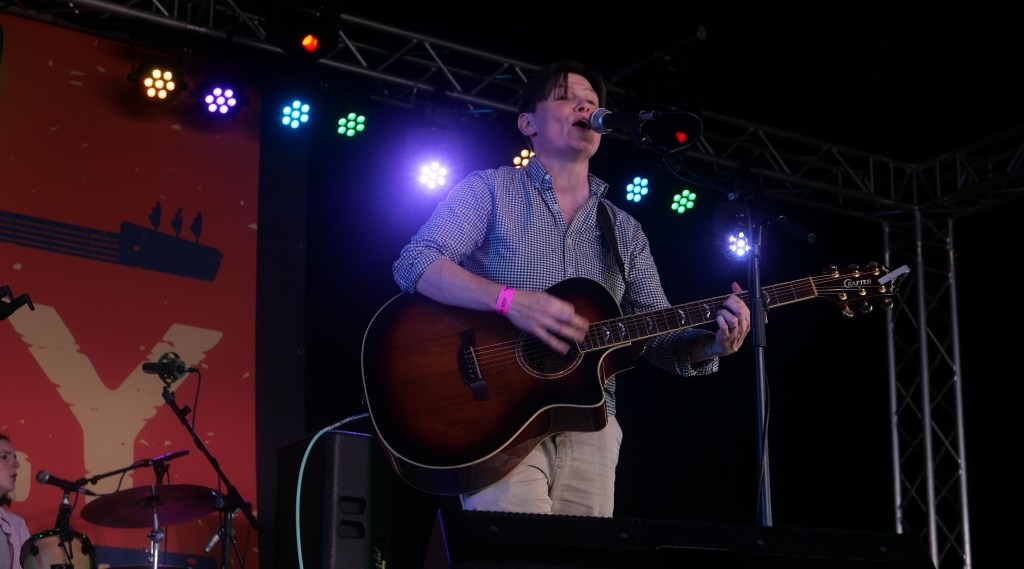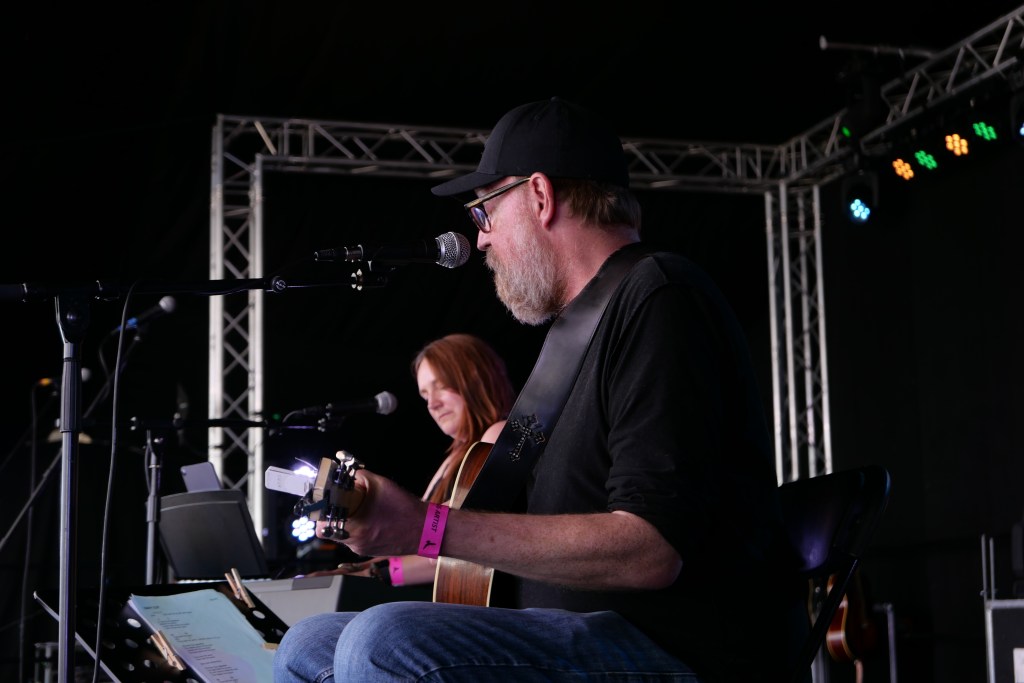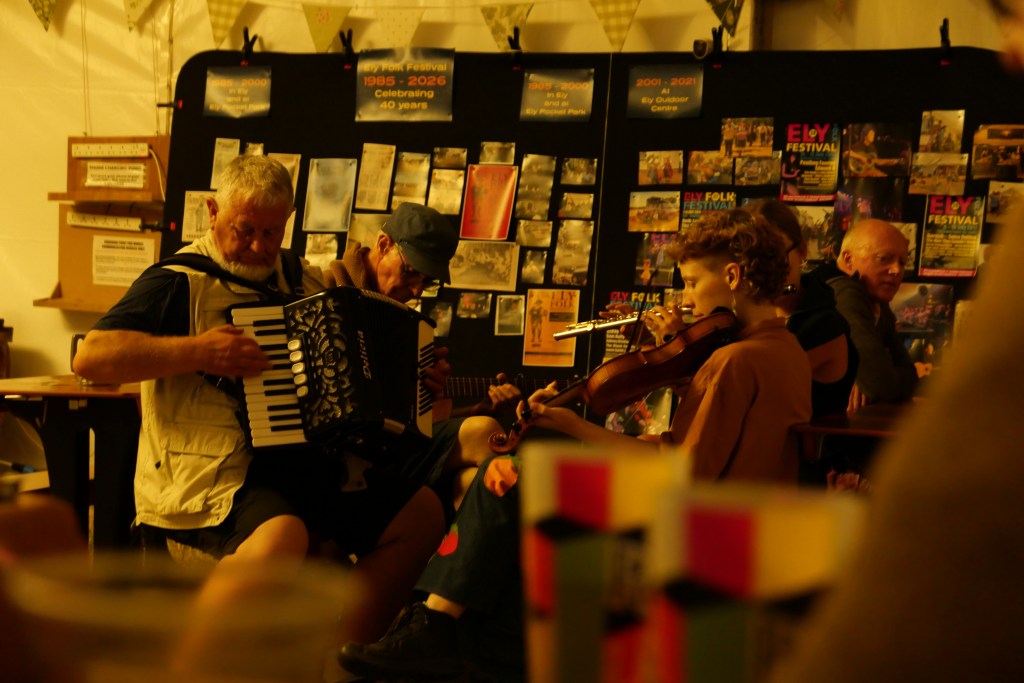
This is not your average festival, not by a long stretch, which is why having tasted the thrill and ambience of Ely Folk Festival for the first time last year I have returned for more. And the mood in the summer heatwave air is one of justifiable celebration as this is their 40th festival, having grown considerably since launching as a Friday evening / all day Saturday event back in 1985. Performances were spread across various locations over Ely in those days, the evolution into the one site major festival sprawl we enjoy today across three stages with food and trader stalls, an ale lovers delight of a bar tent and numerous dance and craft activities for both the young and old has happened slowly but surely. There are also Morris Dance Sides who converge on Ely from far and wide participating in on site performances as well as a Saturday procession through the heart of the city centre. It all feeds into a multifaceted cultural feast of a festival that can quite justifiably claim to be a pivotal cornerstone of the summer roots circuit, particularly for folk who like their music without hype or egotistical showboating, played by committed craftspeople amidst an atmosphere encouraging participation. And it is not all just about acoustic music, there is plenty of rock ‘n’ roll punch, beats and rhythm to be heard in this simmering melting pot of songs and reels.
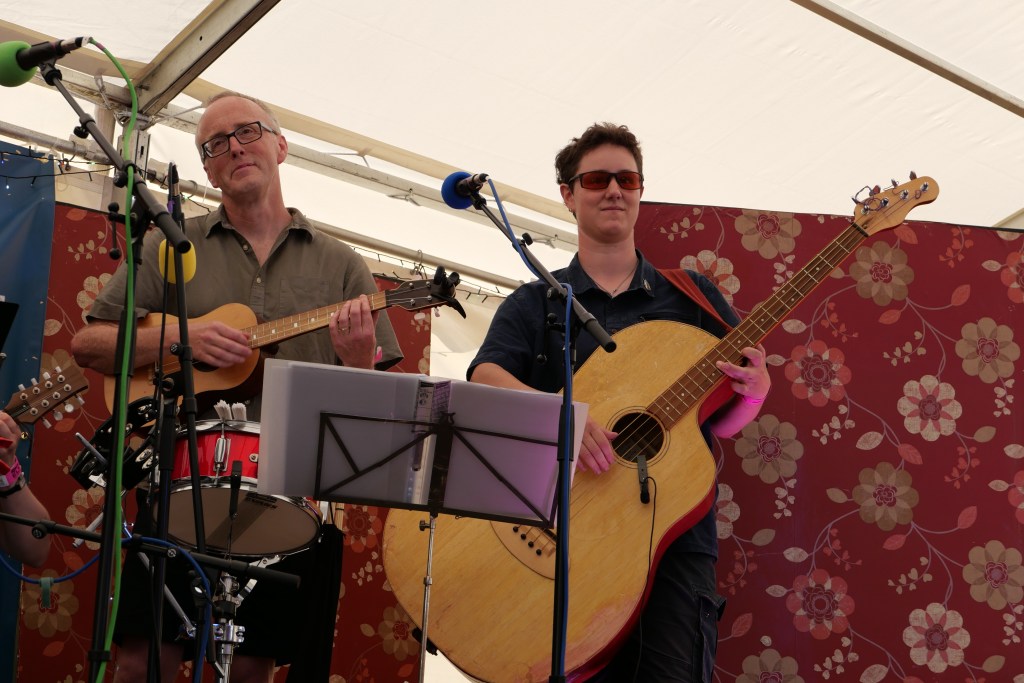
That said, the acoustic performers did see plenty of action this year and there were some unexpected opportunities for them to shine. On two occasions at the Nightingale stage, the tent with more of a club atmosphere and lay out, there were power cuts during sets. Now if this happened to many acts in other genres, it would bring proceedings crashing to an immediate halt as laptops cut out and various other audio enhancements disappear. This is emphatically not the case with a folk act. In fact, they almost step up even more determinedly with a glint in their eye that says, “I am equipped to overcome this situation.” I never did find out exactly what was going on with the power cuts, the rumour was there might have been an issue with a generator packing up in the oppressive heatwave sun, but it really did not matter. During the Nightingale Competition on Saturday evening (a great little competitive festival feature, fifteen acts singing up for two songs each, a judge selected winner opens the main stage on Sunday evening) the superb Chad Mason lost the power with a dramatic bang mid song and yet he hardly blinked before stating “I’ll just keep going.” Very good he was too, reminded me of a young Al Stewart which is no bad thing. Arguably though it was String Onion who had an even more challenging power outage on the Friday. Their set was basically the opening act for the whole weekend, but when they lost amplification, this self-effacing string collective, with some finely crafted songs of their own among the covers, just stepped back from the microphones and sang louder. That said, the player of the giant hand-crafted (by her Dad, also in the band) acoustic bass did hilariously make herself corpse by leaning into a microphone then remembering too late that it was out of service.
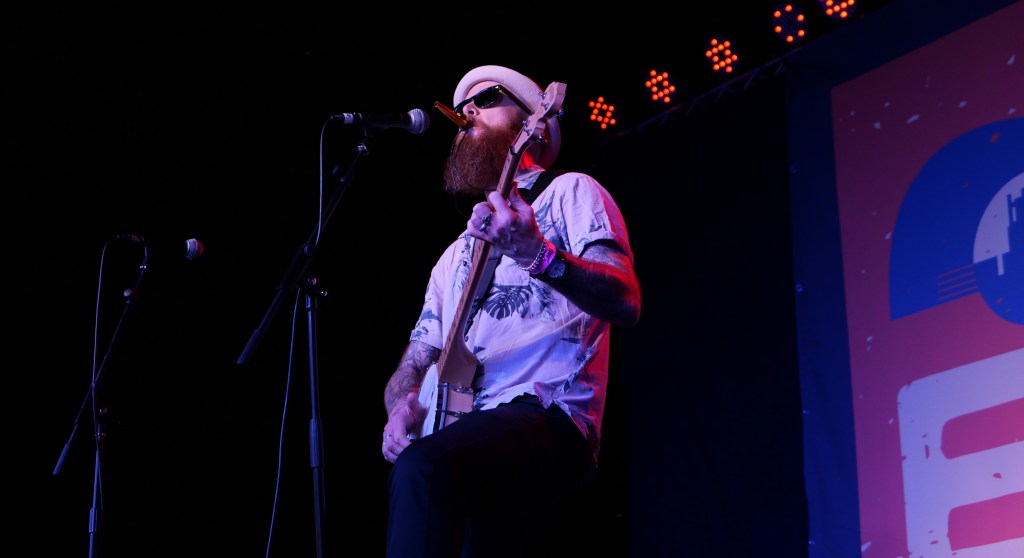
Over on the opening night Kingfisher Stage, site power restored, Joe And Mary were plugging into the natural energy of old-time country and acoustic blues of the early twentieth century. The guitar playing was of a high stripe with songs igniting thanks to the easy comedic rapport of the couple. In a song about disagreement they are, ironically, delightfully tuned in to each other but they go deep too with a couple of heavy hitting emotional song punches. Next up Old Man Boom is a banjo playing purveyor of murder ballads and songs that explore the darker, gothic and macabre side of folk (or maybe foke is more apt) with a seasoning of wit and charm; the laughs he generated with a golden kazoo a good example of his natural verve. Stand outs were many, especially ‘The Man Who Couldn’t Die,’ but the set hit a real pitch with songs from a new EP promised to be “out soon, don’t ask me for a date, I don’t know.” Still, any act that can end with a rousing sing-along asking the question “do you want to join my cult?” to an audience unreservedly answering “yes” despite the most dubious enrolment promises, is alright by me.
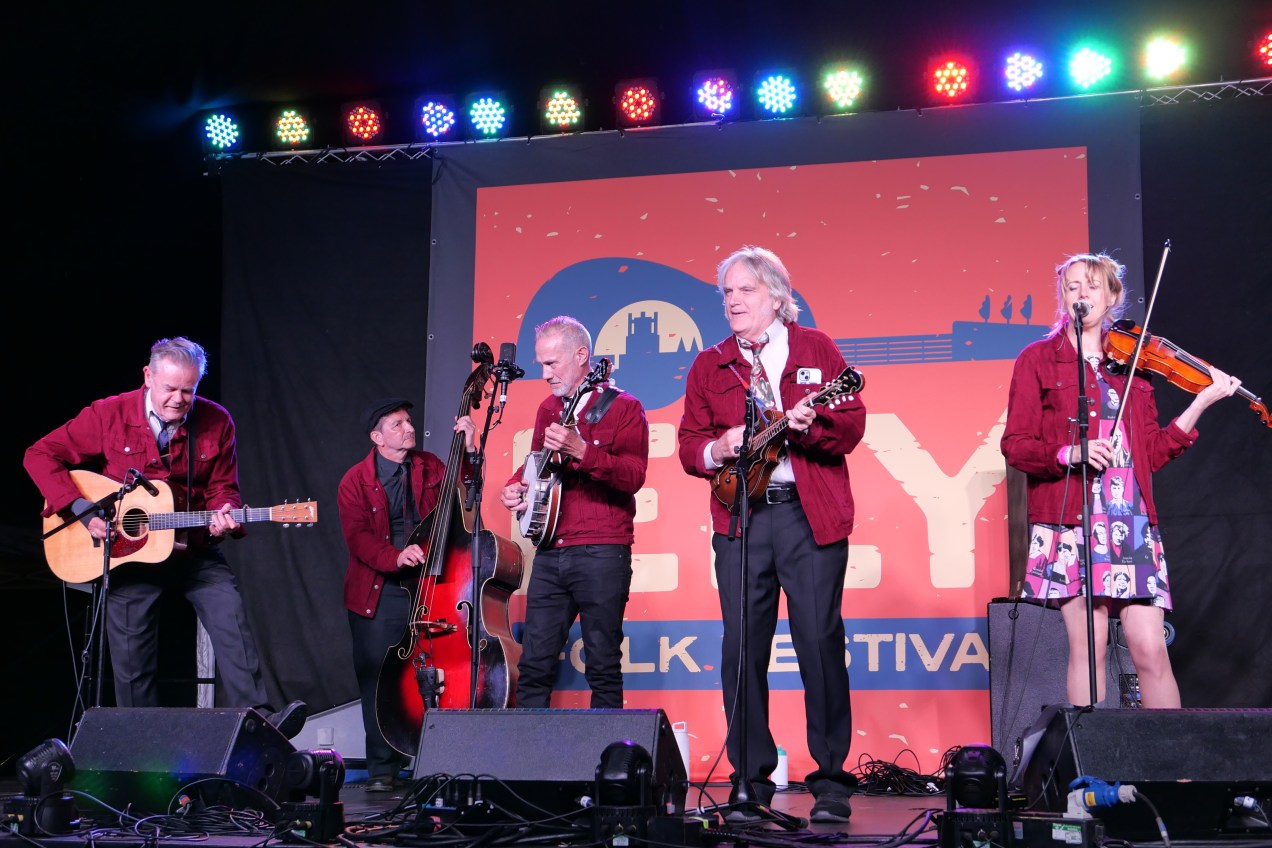
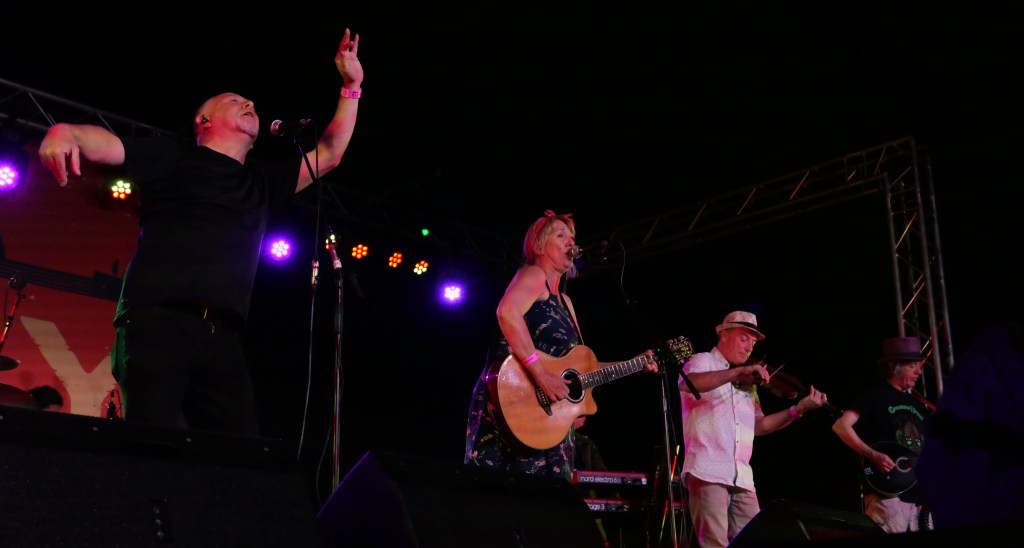
As always at any festival with three stages offering a constant rollover of acts worth hearing, there are periods when it is simply not possible to see everything you might enjoy. I am always attracted towards the spontaneous potential of an open stage, which was happening in the Nightingale, but did not want to miss the Merry Hell headlining the main stage. I am just going to have to live with whatever I missed because seeing the whole of this bands set was absolutely one of the best choices I made all weekend. The folk scene has had many great rabble rousers peddling a gypsy, punk spirit of spiralling electric fiddles, rolling thunder guitar and drums, pounding out songs of community, society, life, love, laughter and connection. I am of course thinking of bands like The Pogues, The Waterboys, The Levellers and Oysterband but I must have taken my eye off the ball because, as much as I have previously enthused over their albums, I had not reckoned with how spectacularly The Merry Hell have grabbed this space by the earholes and made it their own. If their fully loaded arsenal of brilliant songs like ‘Loving The Skin You’re In’ and ‘Bury Me Naked’ were not enough, they are a loveable bunch of muckers to boot. At one point lead singer Andrew Kettle points to his top hat wearing, mandolin playing brother Bob and says, “look at that, AI could never make that!” I was happy enough before I saw this band, I was positively delirious afterwards. If they are playing at a festival or in a town near you, I urge people to go and see them. If you do not like them, I will give you your money back, only I won’t because if you tried to tell me they were no good I wouldn’t believe you. Wow, what an opening night.
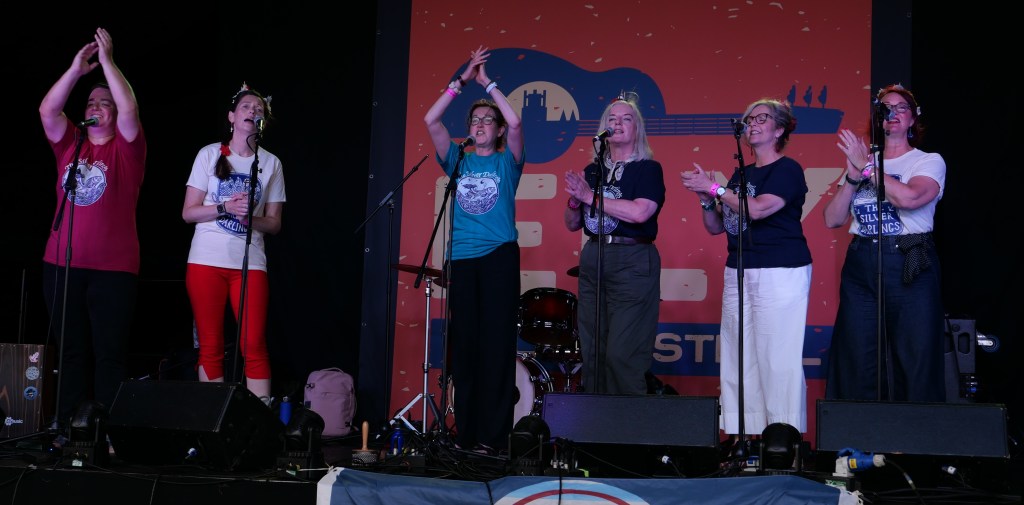
My Saturday kicked off with Sailor Swift, an acoustic guitar toting artist formerly known as Pete Morton, who set the tone for an eclectic day in a set that fused storytelling, talking blues and comedy. He ended with a story of George Formby writing a song in the 1940s but subsequently losing the scrap of paper so that some opportunists decades later would claim the song as their own. So, we get to hear how the original George Formby version of ‘Bohemian Rhapsody’ should have sounded. Something like “just killed a man, put a gun against his head, pulled the trigger now he’s dead. Whoops!” I have seen comedy clubs with far less people doubled up in stitches for sure. I remained at the Kingfisher stage for a six piece all female sea shanty crew from Southend. They have been around for eight years and used to believe women were not allowed to sing sea shanties, likening it to being on a boat and the skipper saying, “you don’t want a witch in your cod end.” But they are here today to prove that women can get their shanty on and they do just that, covering material that ranges from punk shanty covers of New York to traditional Isle Of Wight fare. Admittedly, the Silver Darlings deliver their shanties with a wink that summons the ghosts of the Queen Vic and the unmistakable echo of Beverley from ‘Abigail’s Party’ holding court over the vol‑au‑vents, but behind the tongue‑in‑cheek Essex theatrics, they lock into harmonies with a precision that would make any folk purist sit up straight. Their down‑to‑earth banter only sweetens the deal, turning them into the kind of outfit you are delighted to be won over by.
Over on the main stage Gerry Colvin, one of Ely Folk Festival’s most beloved past performers, is charming his audience every bit as much. His is a masterclass in country-tinged songwriter craft and I have to mention one of the funniest song introductions I heard all weekend from Gerry. Affectionately announcing a song about his late Father, he said “I know wherever he is now he is looking down on us.” A perfectly timed pause follows before, “he’s not dead, he’s just very condescending.” Later in the day, on that same stage, the warm summer sun is gently cooled by the soothing guitar, mandolin, fiddle and banjo stitchwork of The Shackleton Trio, who weave East Anglia‑rooted tales into a sound world that nods knowingly to both US and UK folk traditions. Soon though the lure of the Nightingale Competition was too strong to resist. Fair play to the eventual winner Rafe Barnett whose historically informed stories were a proper throwback to the days when folk song was a potent educational tool. I must give a little shout out to three other acts who left an impression on me. Gerd Wagner (who I also rated in 2025) and his classically elegant guitar playing is a true class act whilst my standout fire starter from last year, Douglas Smallbone, returned to detonate more raw intensity (if he could find a similar situation at a heavy rock / punk festival he might just walk away with the top spot) and then there were Folk Shop. Talented young acts like this give me hope that the folk tradition is in good hands, especially after repeatedly witnessing their core members George and Heather jamming, sitting in and generally just bathing in the pure pleasure of playing for the entire weekend. Honestly, I lost count of the times I heard them, they played on stages, in the bar, cross legged on the floor in the outdoor seated areas, they would probably have jammed at the Portaloo’s if they thought the queues would welcome some accompaniment.
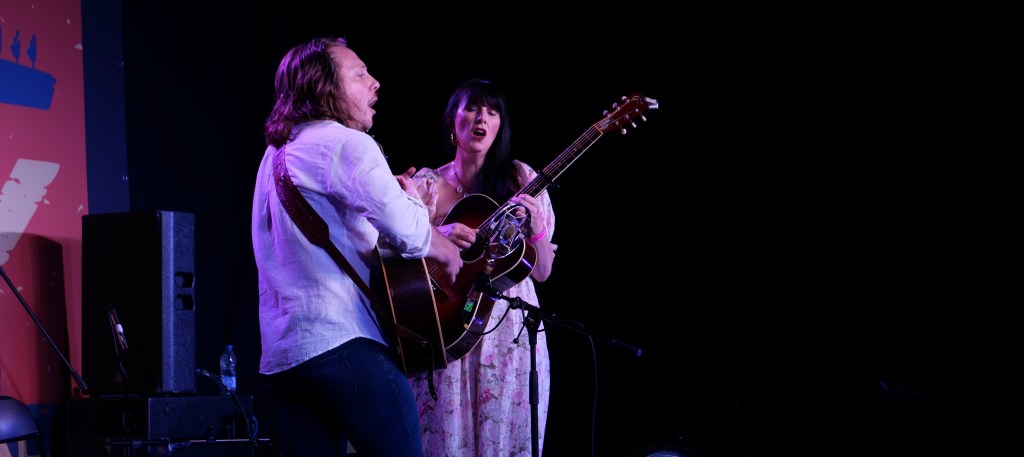
These quickfire stints in the club environment set me up nicely for an evening where some proper Saturday night festival fireworks are let off. First up Grace Petrie had a tank full of protest punk energy, establishing her queer icon credentials in a performance that felt quite cathartic. It was hard not to be moved by personal stories of identity and the struggle to feel comfortable in her own skin but the patriarchy baiting battle cry of ‘Black Tie’ left this vocally responsive audience certain she must be in a good place now. Next, I headed over to the Kingfisher stage because Hannah Sanders and Ben Savage were stirring a mesmerising brew of their own. I had not seen them previously and the festival programme describes one of the countries leading folk duos; it is always a treat to investigate something like this yourself and discover exactly why they are so well regarded. The pair are fascinating because the sound is vintage, as is their positioning around a central microphone, but there is something improbably contemporary about them too which is hard to place. Their combination of voices sound older than the bodies they are transmitting from, so perhaps the present-day element is simply that they channel such pure emotive feeling that it tramples over any older sonic references. Either way, they are like health food for the ears in the same way that the following Greenman Rising inspire a workout for the feet. Saturday night is always alright for dancing at a festival, after all you can crash out for ten hours at the campsite and recover through Sunday morning if required, and this does indeed prove to be the right band for getting people out of their seats for a heartily raucous bit of folksy crash, bang and wallop.
Sunday is warmly ushered in with a long feature on the main stage called the Festivals Patrons Concert. The primary content is a couple of headline worthy sets, firstly from Cambridge based leading light of the roots, acoustic scene Brooks Williams followed by the formerly of this parish but now Glasgow based Boo Hewerdine. Brooks carries himself with the assuredness and musical authenticity of a genuine americana legend with the tunes and swagger to back it up, before Boo plays an equally winning card in performing songs from recent concept album ‘Things Found In Books.’ The record was made with Yvonne Lyon, joining Boo today too on keys and shared vocals. Despite the top-notch support this does end up being very much Hewerdine’s show, for all his terminally bemused stage demeanour. He plays the deadpan card well for laughs with stories about idiotic ancestors and meeting Paul McCartney before later reminding us there is a genuine hit to his name with ‘Patience Of Angels.’ The highlight though was a brace of momentous rhythm and blues style numbers played with Brooks to close the set (‘The Man With The Hammer’ and ‘Sweet Honey In The Rock’) reviving their State Of The Union collaboration. Boo’s closing ‘What A Wonderful World’ was beautiful enough to bring a lump to the throat, its simple optimism standing in stark contrast to the horrors filling the news each day.
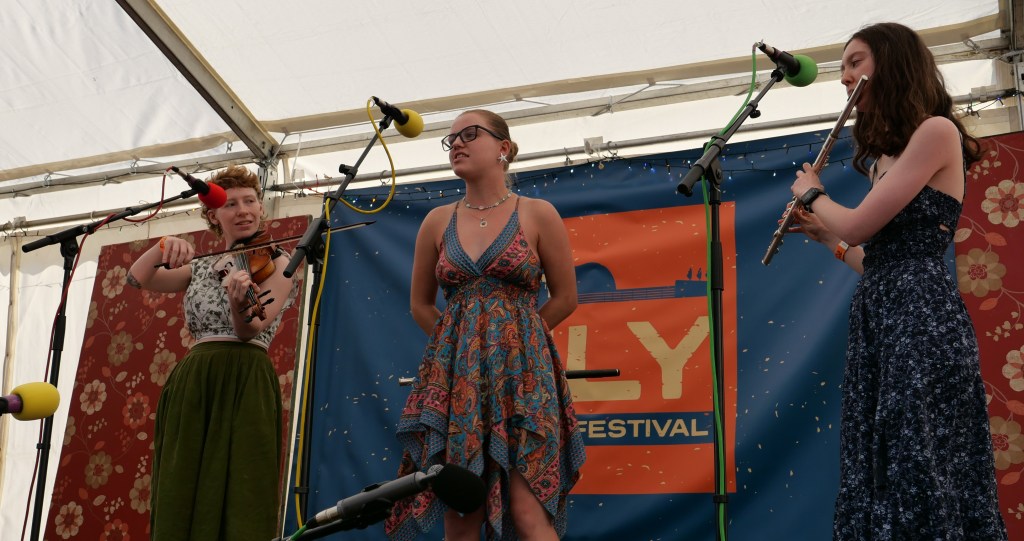
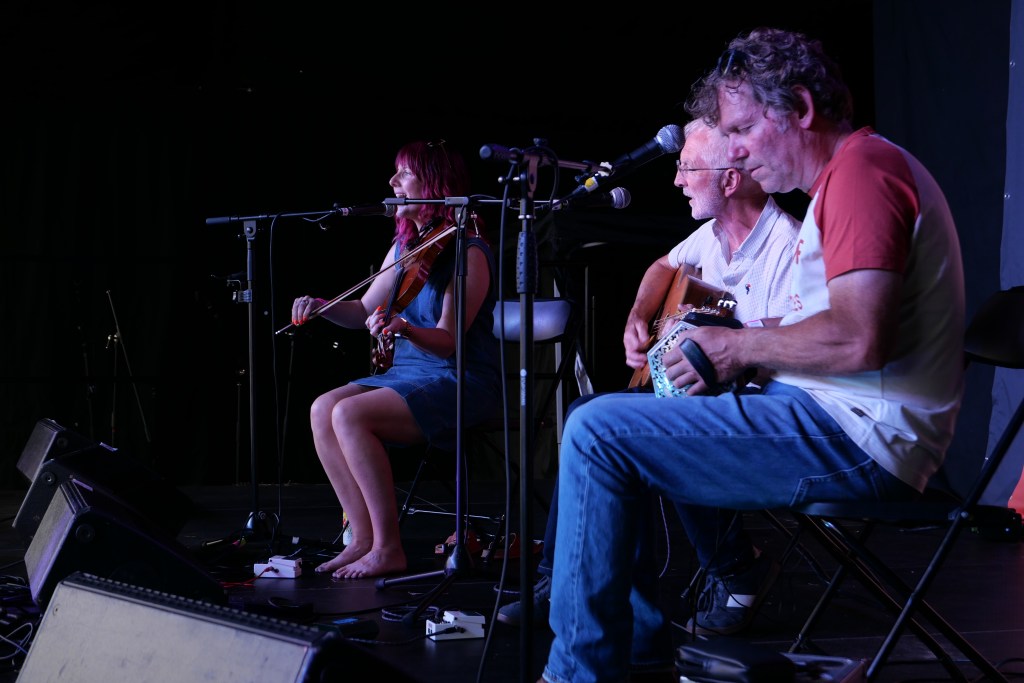
Over at the Kingfisher stage I was thrilled to catch Sherburn Bartley Sanders, especially as I had already missed a couple of earlier opportunities over the weekend. They are easily some of the best traditional folk purveyors you will encounter at a festival, Denny on guitar and vocals has the aura of a seasoned singer songwriter veteran, leading the band through deep Dylan cuts and popular twentieth century acoustic standards like ‘The Auld Triangle’ while Emily’s fiddle and vocals sweeten the deal so delightfully. Their not-so-secret secret weapon though is Chris on concertina, a man who cannot help but disarm an audience with his ever-present mischievous smirk and spontaneous audience interaction. He even got into a little back and forth going with the Fruit Tree photographer and I, riffing on the notion that we had fallen out. It is actually a very effective tactic, loosen the crowd up with comedy and then hit them between the ears with some of the greatest acoustic sounds of their lives. One of those groups that you make a mental note to definitely go and see should they play locally again. You wouldn’t want to travel to see them though (joke!)
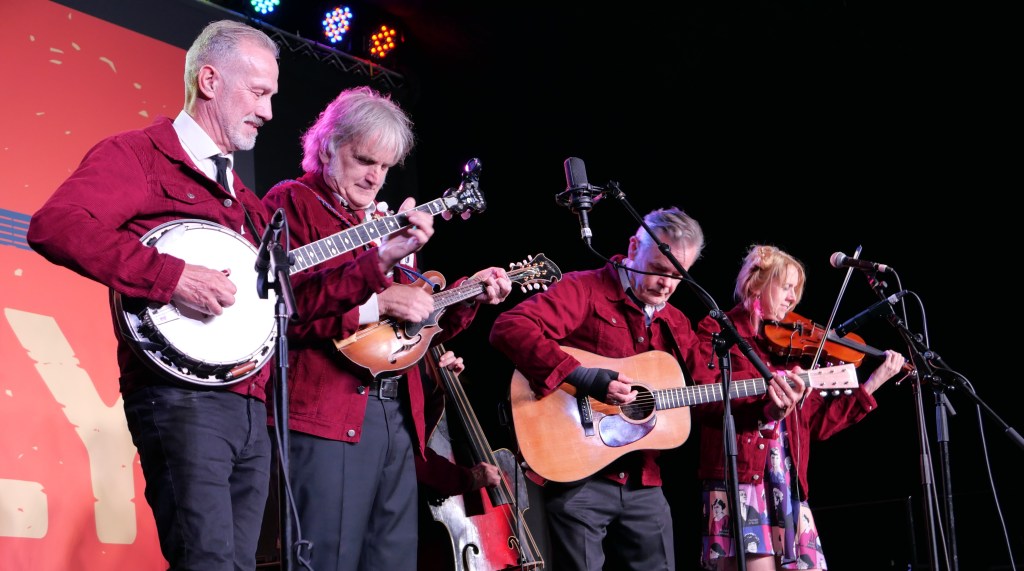
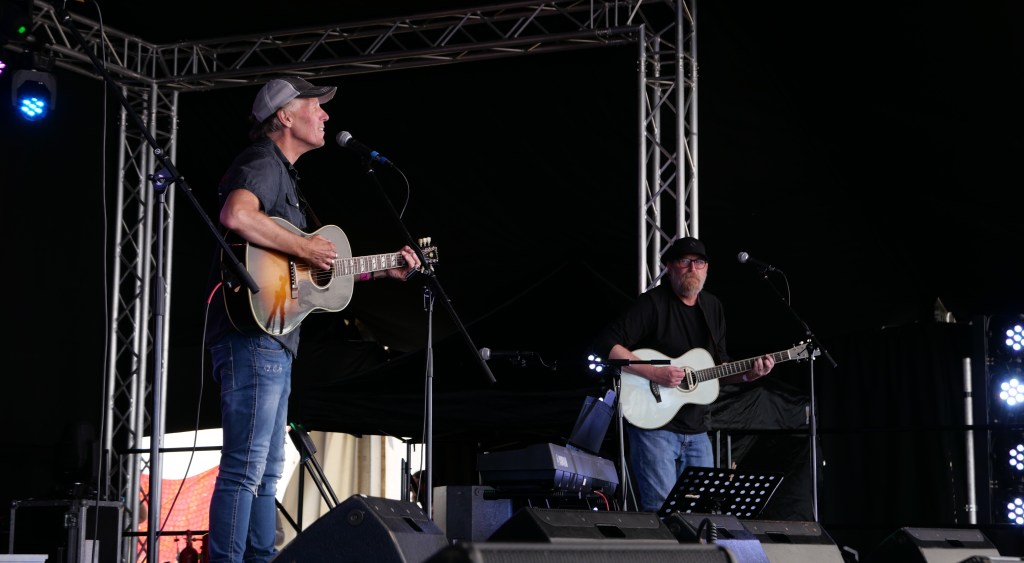
Over on the main stage Alistair Russell and Chris Parkinson, both with storied CV’s that include long term participations in Battlefield Band and The House Band, among many others, cover the arena in hazy Sunday evening ambience playing Irish and Scottish music with an inclusive charm and particularly strong musicianship. I was glad to have this battery saving time because the night, and indeed the whole festival, was gearing up for an explosive finale over at the Kingfisher. The Coal Porters have been the most blistering bluegrass act on the scene throughout this century, but they called it a day in 2018. However, the five piece still get together for occasional live appearances; legendary musicologist, band leader and all-round font Sid Griffin spared some time to speak to Fruit Tree Records (full length interview to follow soon). “Everyone was asked if they wanted to accept the Ely Folk Fest offer and everyone seemed into it” he explained. As far as more permanent Coal Porters action goes, he reminds me that “seventeen years we went at it pretty hard” but does promise “there is a ‘Best Of The Coal Porters’ coming out next year with a live album attached, so we will be doing some dates to promote that release.” For tonight though we settle happily into the rush of a bluegrass act that rock the room with impressively eclectic material ranging from their own ‘The Day The Last Ramone Died’ alongside Paul Weller’s ‘Walls Come Tumbling Down’ and a gloriously swinging good-time romp through Chuck Berry’s ‘You Never Can Tell.’ Their message is emphatically that this music is good for you, but I would expand that statement to shout Ely Folk Festival is good for you and works wonders for the soul. Just as I concluded last year so it is once again, I cannot wait to return.
Words: Danny Neill Photos: Sophie Reichert